Previous Page Homepage Site Search
Copyrighted Material—All Rights Reserved

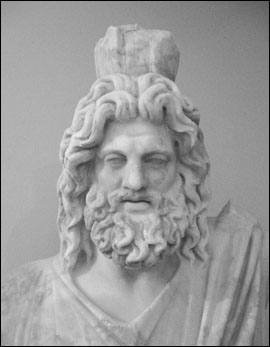
Hades is the lord of the dead but he is no devil. After life is over for mortal men and women, their souls must have a place to reside ... the House of Hades is that place.
Calculating the number of people who have lived and died is strictly guesswork but it's assumed that the dead outnumbered the living until very recently ... at approximately the turn of the last century, the number of people living on the earth became greater than those who had gone to the House of Hades.
The common misconception today is that Hades is a place and not a god ... when someone suggests that so-n-so "Go to Hades" they're actually saying "Go to the House of Hades" but the expression has become too literal and thus Hades and the Underworld have become synonymous even though the House of Hades is just a portion of the Underworld.
Hades is one of the six children of the Titans, Kronos and Rhea. He is the brother of Zeus, Poseidon, Hestia, Demeter, and Hera.
Hades and his brothers and sisters were the grandchildren of Ge (Mother Earth) and by far her most admirable descendants ... Hades' parents were Titans and although the Titans were not the strangest of Ge's children, they were indulgent and overbearing in the extreme. In order for Ge to be free from the oppressions of her son-consort Ouranos (Heavenww), she asked one of her Titan sons humble Ouranos by mutilating him.
Hades' father Kronos accepted the task and succeeded in castrating Ouranos ... he usurped his father's authority and he too began to annoy Ge with his arrogance. Ge gave Kronos an oracle stating that one of his children would seize his authority in much the same way he had dethroned his father. Kronos mistakenly thought he could defy the prophecy.
Kronos and his sister-wife Rhea began to have children. Kronos took each child as it was born and swallowed it whole ... he thought that if his children were safely inside him, there would be no way for one of them to challenge him. After five children, including Hades, had been born and swallowed, Rhea consulted with Ge as to how she could prevent Kronos from swallowing any more of her children. Ge suggested that Rhea hide her next child and substitute a stone wrapped in swaddling clothes for Kronos to swallow ... the trick worked ... Kronos snatched up what he thought was Rhea's sixth child and swallowed it down without suspecting he had been duped ... in this way his son Zeus escaped the fate of Hades and Rhea's other children.
Rhea hid Zeus on the island of Krete until he was a mature adult. Hades and his siblings also matured but they were still trapped in Kronos' vast being. The time finally came for Zeus to confront Kronos ... he attacked Kronos with such ferocity that the other five children were vomited forth from Kronos' stomach. Hades was thus born a second time.
Hades and his brother and sisters looked upon Zeus as their savior and called him Father, but Kronos and the other Titans did not accept the authority of the new Immortals ... a ten-year war ensued ... the War of the Titans. Finally, the Titans were defeated and relegated to the precincts of the immortal Tartaros who occupies a dimension of the Underworld that is separate from the domain that was soon to become the territory of Hades. The six children of Kronos and Rhea became Olympians, taking their name from their new home on Mount Olympos. Hades and his two brothers, Zeus and Poseidon, divided creation into thirds and each took a portion for their own ... Hades was allotted the world of mists and darkness as his domain.
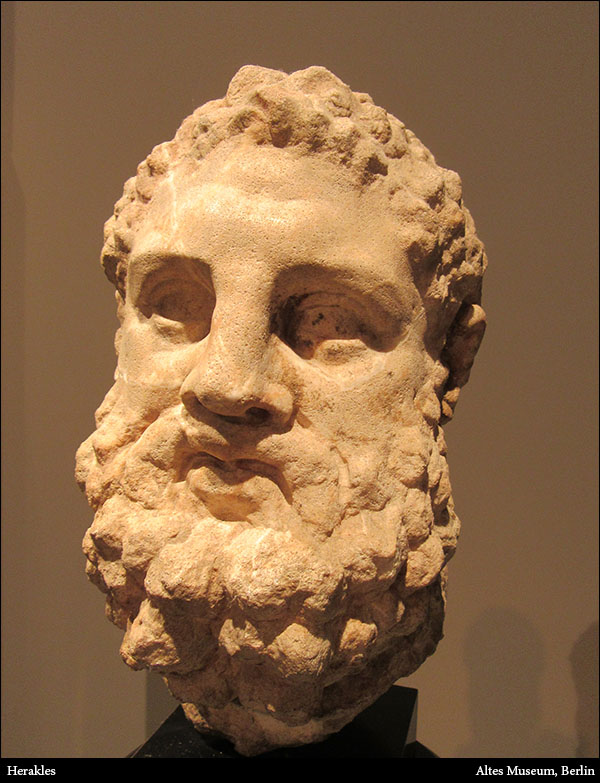
Mortality overtakes all mortal creatures. After death, everyone must kneel before Hades as he metes out somber justice befitting each individual's allotment of punishment or reward. Several individuals earned the right to enter the realm of Hades and then return to the land of the living—Herakles, Odysseus, and Orpheus entered the House of Hades and were permitted to return to the light of day.
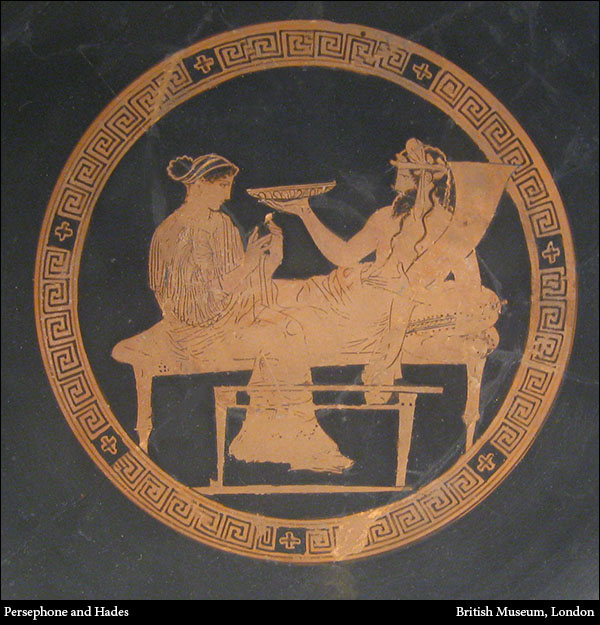
Zeus has a wife in addition to his many consorts ... Poseidon has no wife but he too has had many consorts ... Hades is the only one of the three to have a wife to which he was completely loyal ... he became infatuated with his niece Persephone and decided to "take" her as his wife.
Persephone was the daughter of Zeus and Demeter, goddess of the harvest ... Persephone was often called Kore, the Maiden or simply, the Maid. She attracted the attention of her uncle Hades because he could not resist her charm and beauty. As a formality, Hades asked Zeus' permission to "take" Persephone as his wife ... Zeus consented to the union, but Hades purposefully did not ask Demeter if he could marry her daughter. An oracle was not needed to foresee the disaster that was destined to happen.
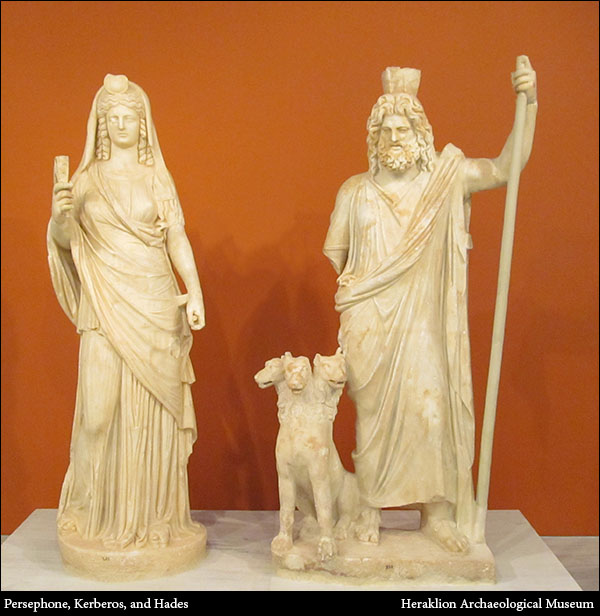
While at play with the daughters of Okeanos (Ocean), Persephone was picking flowers ... but these weren't earthly flowers ... these flowers were the work of Zeus and put there for "a girl with a flower's beauty." The flowers were there to ensnare Persephone in a trap, a beautiful, divine trap. The trigger for the trap was an irresistible flower with one hundred stems of fragrant blossoms. When Persephone reached out with both hands to pluck the flower, the earth opened at her feet and Hades roared forth in his golden chariot and seized her before an alarm could be raised.
No mortal on the earth heard Persephone's cries for help before she vanished into the Underworld. Of the Immortals, only two heard the faint cries of the abducted girl ... the Roaring Goddess Hekate and Helios (Sun).
Demeter began searching in vain for her daughter. Her sorrow was so great that she denied herself all food, drink, and comfort for nine days. When Eos (Dawn) took to the skies on the tenth day, Hekate came to Demeter and said she did not see anything but heard a faint cry that might have come from Persephone. The two goddesses went to Helios and although he had not actually seen the kidnapping, he knew the plot and the players. He told Demeter that the abduction was the work of Zeus and Hades. He further advised her to accept the situation because Hades was the Lord of Many and "not an unseemly bridegroom." Demeter did not like his advice and choose a long, brooding path to regain her precious daughter.
Demeter finally devised a way to force Zeus to free Persephone. Locked in her temple at Eleusis, Demeter cursed the earth with famine. Seeds would not grow. Plowed fields remained empty. Zeus and the other Immortals were worried that this would be the end of mortal life on earth and, one by one, the Immortals begged Demeter to accept the will of Zeus and allow Persephone to stay with Hades as his wife. Demeter was unwavering in her determination and refused to shed her grace and abundance on the earth.
Zeus sent his son Hermes to speak gentle words to Hades and persuade him to let Persephone return to her brooding mother. Hades was sympathetic but he was also intent on keeping his bride. He tricked Persephone into eating a pomegranate seed and by doing so she was forever bound to him. Persephone returned to the world of light to see her mother, but her stay was only temporary.
Demeter was joyous when Persephone emerged from the Underworld, but her joy was short-lived. She soon realized Hades had tricked Persephone into eating the pomegranate seed, thus breaking the bond between mother and daughter. Demeter resumed her brooding and the earth continued to suffer. Rhea, Demeter's mother, made Demeter see the reality of the situation—Persephone was in fact bound to Hades and Demeter had to compromise or never see her daughter again.
It was decreed by Zeus that Persephone would spend two thirds of the year with her mother and the remaining third in the Underworld with her husband, Hades. Each year when Persephone returns from the Underworld, Demeter showers the earth with gentle rain and sweet breezes. Each time Persephone returns to Hades, Demeter hardens her heart and the earth is wracked with bitter cold and harsh winds.
Persephone spends the majority of the year with her mother ... while she's with Demeter she is described as White-Armed, Chaste, Proud, August, and Holy. When she's associated with Hades her name is preceded by adjectives such as Awful, Dread, and Grim. As an example of her Underworld persona, as Odysseus conversed with the spirits of the departed at the entrance to the Underworld, he became more and more anxious because he was afraid Persephone would come at him carrying the head of a Gorgon. This otherwise fearless man lost his nerve at the thought of coming face-to-face with Persephone. Clearly, Persephone is the ideal wife for Hades.
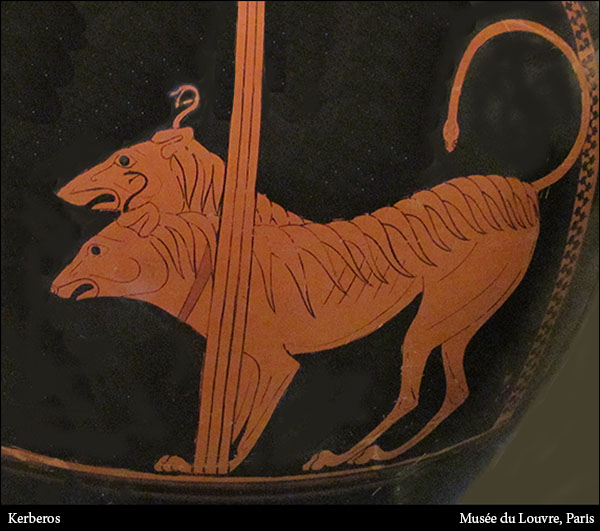
The Hound of Hades was first mentioned by Homer in the Iliad, but no name or description was offered. Later poets stated that the "Hound" was in fact a multi-headed dog and named him Kerberos. Other poets suggested that even though Kerberos was called a "Hound" he was actually a serpent, which would conveniently explain the terror associated with the animal and its propensity for living underground.
There are other creatures in the ancient texts referred to as "Hounds of Hades" but it's clear from the context that they are clearly not dog-like. During the Quest for the Golden Fleece, the sorceress Medeia called forth Death-Spirits, "the swift hounds of Hades," to distract the giant bronze man, Talos.
The current conception of the Hound of Hades is of a three-headed dog named Kerberos. He is the watchdog for the gates of the House of Hades and Persephone ... he welcomes anyone who wishes to enter with a wagging tail and fawning disposition ... however, for those who try to leave without his master's permission, Kerberos becomes what you would expect a Hell Hound to be ... utterly fierce and terrifying ... this was the beast Herakles was required to bring from the Underworld into the light of day as the last of his Twelve Labors.
Herakles was required to complete Twelve Labors for his cousin Eurystheus ... his Twelfth Labor was to retrieve Kerberos from the Underworld and present the hound to Eurystheus in Mykenai. Herakles was given the task because it was presumably impossible but Eurystheus underestimated Herakles' determination and clout.
Herakles went to the House of Hades and politely asked his uncle for permission to take Kerberos to Mykenai so he could finish his last Labor. Hades agreed but only under the condition that Herakles be accompanied by Hermes to make sure no harm came to Kerberos. When the trio arrived at Mykenai there was an unforgettable scene ... Eurystheus was so terrified that he hid in a giant urn until Kerberos was on his way back to the Underworld.
It might seem obvious that, as lord of the dead, Hades' house must be in the Underworld ... but the "Underworld" is an infinitely large place with subdivisions employed for different purposes.
The god Tartaros is known as the Pit and occupies the lowest portions of the Underworld ... he is one of the four original Immortals ... to say that he is "vast" is an understatement ... Zeus banished the Titans to the realm of Tartaros after the War of the Titans.
Erebos is also encompasses a part of the Underworld ... he is the primal son of Chaos and as such, very ancient ... he is the Darkness Under the Earth ... he occupies an area above Tartaros and is the abode of the wicked after death.
The House of Hades occupies the space somewhere between Erebos and the surface of the earth. There are passageways from various parts of the earth to the House of Hades but without a divine guide to pull back the obscuring mists, these passageways appear to be only caverns or caves.
The echoing halls of the House of Hades are near the abodes Nyx (Night) and her sons, Hypnos (Sleep) and Thanatos (Death). There are five rivers marking the boundaries of the House of Hades ... the Acheron, the Styx, the Pyriphlegethon, the Kokytos, and the Lethe. The ominous names of these rivers make it clear that this is the land of the dead ... River of Woe (Acheron) ... Oath River (Styx) ... River of Fire (Pyriphlegethon) ... River of Tears (Kokytos) ... River of Oblivion (Lethe).
When Odysseus had to go to the entrance to the House of Hades to consult the blind prophet Teiresias, he was given specific instructions by the Dread Goddess Kirke:
"... let there be in your mind no concern for a pilot to guide your ship, but set up your mast, and spread the white sail, and sit yourself down; and the breath of Boreas (North Wind) will bear her onward. But when in your ship you have now crossed the stream of Okeanos (Ocean), where is a level shore and the groves of Persephone—tall poplars, and willows that shed their fruit—there do you beach your ship by the deep eddying Okeanos, but go by yourself to the dank House of Hades. There into Acheron flow Pyriphlegethon and Kokytos, which is a branch of the water of the Styx; and there is a rock, and the meeting place of the two roaring rivers."
Odysseus gave more details as he was telling the tale:
"So when we had made fast all the tackling throughout the ship, we sat down, and the wind and the helmsman made straight her course. All the day long her sail was stretched as she sped over the sea; and the sun set and all the ways grew dark. She came to deep-flowing Okeanos, that bounds the earth, where is the land and city of the Kimmerians, wrapped in mist and cloud. Never does bright Helios (Sun) look down on them with his rays either when he mounts the starry heaven or when he turns again to earth from heaven, but baneful night is spread over wretched mortals. There we came and beached our ship, and took out the sheep, and ourselves went beside the stream of Okeanos until we came to the place of which Kirke had told us." (The Kimmerians lived north of the Caucasus Mountains.)
Most of the souls in the House of Hades seem to be mindless wanderers with no sense of time or purpose. Certain individuals are given preferential treatment because of the exemplary lives they led while they were alive ... Rhadamanthys, Minos, and their half-brother Aiakos were enlisted by Hades to be judges of the dead because of their fairness and sound judgment. Other individuals were singled out for torment instead of privilege.
Sisyphos was the king of the city of Korinth who was noted for his cleverness. Sisyphos was so clever that when Thanatos (Death) came to claim his life, the undaunted king captured Thanatos and kept him in chains until Ares (god of war) forced Sisyphos to release him. While Thanatos was in chains, all death stopped on the earth and chaos prevailed.
Zeus secretly stole Aigina, the daughter of the river-god Asopos. Sisyphos knew who had perpetrated the crime but would not tell Asopos until the mighty river supplied a spring on the top of the Acrokorinth. Zeus did not take kindly to having his infidelities exposed. For this and other blunders, when Sisyphos was finally taken to the House of Hades, he was punished by being compelled to roll a stone to the top of a slope where it always escaped him and would roll down the slope again ... Sisyphos would begin the task again and thus continue forever.
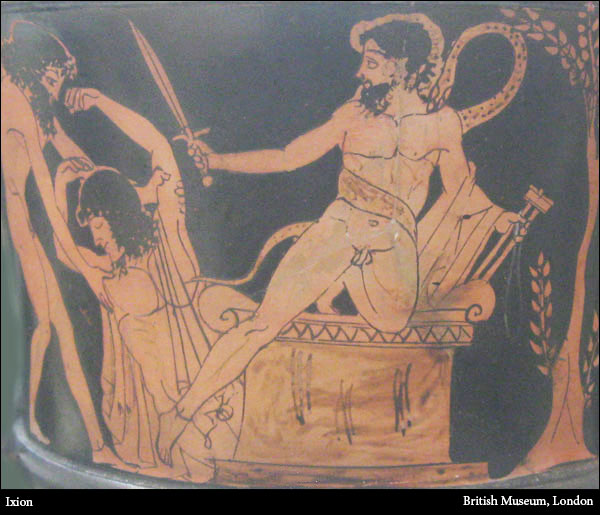
King Ixion of Thessaly wanted to marry a woman named Dia. Rather than pay the customary dowry to Dia's father, Ixion murdered the unsuspecting man by arranging to have him fall into a pit of burning coals. Zeus forgave Ixion for this outrageous act, but the ungrateful Ixion tried to seduce the goddess Hera. Zeus formed a counterfeit Hera from a cloud and named her Nephele. Ixion did not perceive the deception and showered his affections on Nephele thinking he had seduced the real Hera. Ixion and Nephele had a son named Kentauros who became the progenitor of the Centaurs when he mated with the Magnesian mares ... the Centaurs were a race of creatures having the body of a horse with the torso and head of a man.
Zeus condemned Ixion to spend eternity on a revolving wheel in the House of Hades. The following image shows Ixion being attacked by a snake as he's being fastened to the revolving wheel in the House of Hades. The woman being carried away might be Dia.
There are few examples of disrespect for the Immortals to match that of Tantalos. Tantalos was a son of Zeus who received great honors, but his complete lack of restraint earned him a special punishment in the House of Hades. Tantalos either tried to steal the food of the Immortals or killed his son Pelops and served the flesh to the Olympians.
A version of his punishment is given in the fragmentary remains of The Returns where he was permitted to live with the Immortals and allowed to ask for anything he desired. His pleasures were so self-indulgent that Zeus surrounded him with earthly pleasures and placed a giant stone over his head to prevent him from enjoying them. He was placed in a pool of water from which he could never drink and under a fruit tree from which he could never eat.
Teiresias was a blind prophet from the city of Thebes who led a long and fascinating life. He lived for over 250 years ... he was an advisor for King Kadmos, the founder of Thebes, as well as a consultant to the doomed King Oedipous, who ruled Thebes one generation before the Trojan War. When Teiresias died he was of course transported to the House of Hades, but he was unique in that he was the only "guest" of Hades who was allowed to retain his intelligence after leaving the land of the living.
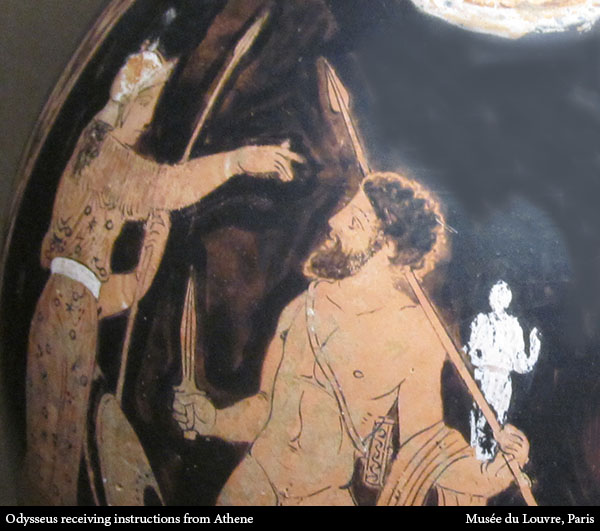
The long-suffering hero Odysseus was unable to return to his home because he offended Poseidon (lord of the sea). He was told that Teiresias was the only person, living or dead, who could accurately foresee his fate. Odysseus went to the entrance to the Underworld and called Teiresias forth from the House of Hades by performing an elaborate ritual.
Odysseus dug a pit measuring one square cubit ... he poured libations of milk, honey, and wine around the pit while praying to Hades and promising to sacrifice his best heifer and a black ram on an altar filled with rich gifts when he returned to his home ... he then sacrificed a ram and a black ewe with their heads towards the darkness of Erebos. With the preparations complete, Odysseus turned away from the pit, drew his sword and awaited the arrival of Teiresias.
Fortunately for Odysseus, the prophecy Teiresias uttered was good news ... Teiresias told Odysseus he would return to his home and die a noble death. After Teiresias left, the sacrificial animals were flayed and burned, calling forth other souls to be questioned by Odysseus.
Odysseus descended into the Underworld, but he only went as far as the entrance to the House of Hades and therefore did not meet Hades or Persephone. Odysseus had been away from home for almost 20 years and needed to know when his wanderings would be over ... the blind prophet Teiresias knew the answer.
Odysseus had the protection of the goddess Athene and the guidance of the Dread Goddess Kirke (Circe), otherwise he would have never found the entrance to the Underworld or been able to leave the precincts of the dead. After his successful consultation with Teiresias, Odysseus was able to speak with several of the inmates ... some of them he had known in life, others he had only heard of because of their good or bad deeds.
Other than his conversations with his fallen comrades from the Trojan War, the most touching encounter Odysseus had was with his mother, Antikleia. She had been alive when he sailed to Troy but that had been twenty years hence ... she died while he was away. She approached him as soon as he arrived, but he reluctantly drove her away until after he had a chance to speak with Teiresias. After Teiresias spoke to Odysseus and faded back into the mists, Antikleia returned ... she seemed to vaguely know his circumstance but was astounded that he would come to the House of Hades while he was still alive.
Antikleia told Odysseus that his wife and son were still awaiting his return and his father was still alive and retired to a small farm ... she told him that his absence had killed her. Odysseus was heartbroken and asked if his mother's appearance was some sort of cruel deception perpetrated by Persephone ... Antikleia assured him that although Persephone was capable of such trickery, he was seeing her as all souls appear after the flesh had been burned from the bones, and the spirit flitted about and hovered to and fro in the House of Hades.
Herakles had two significant encounters with Hades ... taking Kerberos to the surface of the earth has already been discussed but there was another more violent confrontation between Herakles and Hades at the city of Pylos.
The goddess Athene was a dependable protector of Herakles ... she helped him through many difficult situations and even made sure he survived his crossing of the Styx when he went to the House of Hades. She was also his ally when he laid siege to Pylos, but she was apparently not at his side when he came face to face with Hades. Hades was a defender of Pylos and a formidable foe for any man or demigod ... Herakles got the upper hand and stabbed Hades in the shoulder with his spear ... it was a serious wound ... Hades retired from the battlefield and went to Mount Olympos for treatment by the Immortal physician, Paieon.
We might assume that Herakles' encounter with Hades at Pylos happened sometime after Herakles was given permission to take Kerberos to the surface of the earth. We really can't expect Hades to endure a serious spear wound and then allow the perpetrator to take his ferocious watchdog into the light of day.
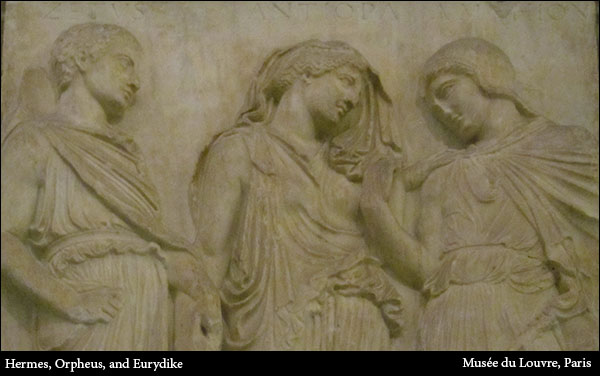
Everyone who went to the House of Hades while still alive did so with a specific goal in mind ... Orpheus had a very noble reason for descending into the Underworld ... he went to Hades for the sake of love.
Orpheus was the most skillful musician in ancient Greece ... he was the son of the Muse Kalliope and a man named Oeagros, a grandson of Poseidon. Orpheus' ability as a musician was so profound that he was said to have moved boulders and changed the course of rivers simply by playing the lyre. One legend proclaimed that he charmed the oak trees of Pieria and marched them to Thrace where they still stand in close order.
Orpheus grieved the loss of his beloved wife, Eurydike. He refused to accept the finality of her death and followed when she descended into the Underworld. His wit and talent charmed Persephone, who allowed Orpheus to lead Eurydike back to the surface of the earth provided that he not look back to see if Eurydike was following him. At the very last moment Orpheus was compelled to look around and by doing so, Eurydike was returned to the land of the dead and lost to Orpheus until he also died.
Perseus was a son of Zeus and Danae ... he had the good fortune of being allowed to use the Cap of Hades without having to actually meet Hades.
The Cap of Hades is also called the Helm of Hades ... it has the unique ability of making the wearer invisible ... we might assume that Hades uses this cap to walk among the living without causing terror and confusion.
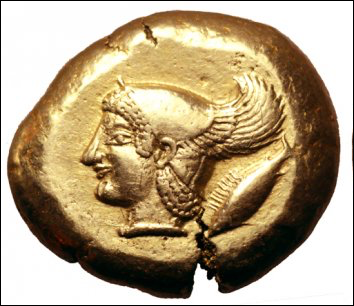
The above image is of a rare Kyzikos EL Stater (circa 550-500 BCE) taken from the website of Roma Numismatics Limited and used here with their kind permission. The coin shows the head of a youthful Perseus wearing the Helm of Hades ... a tunny fish is off to the side.
Perseus and his mother became the guests and then prisoners of King Polydektes of the island of Seriphos. In order to gain their freedom, Perseus was given the task of killing and beheading the Gorgon, Medusa.
Medusa was one of three Gorgon sisters who have snakes writhing around their heads, wrists, and waists ... looking directly at one of the Gorgons will turn any creature to stone. Medusa was the only one of the three who was mortal ... she could be killed, and it was Perseus' task to kill her.
To accomplish that formidable feat, Perseus needed some specialized equipment ... using brute force and wit, he confronted the Graiai (the Gray Sisters), who were three women, gray from birth, who shared one tooth and one eye between them. Perseus stole their tooth and eye and using them as ransom, forced the Graiai to give him the location of the Nymphs who had possession of the Cap of Hades (to make him invisible), a pair of winged sandals (for flying) and a kibisis (a bag to hold Medusa's head) ... he later obtained a sickle (or sword) from Hermes and succeeded in slaying Medusa.
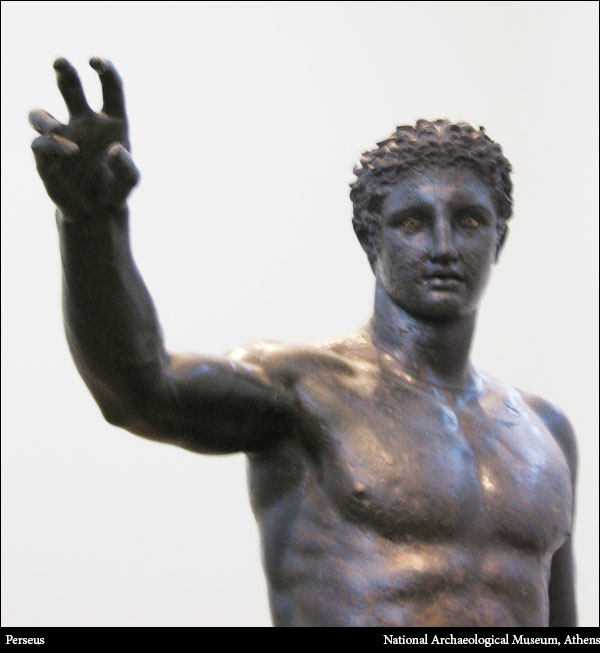
With the exception of Persephone, Hermes has more contact with Hades than any other Immortal.
Hermes is formally the messenger of the Immortals, but he is also the guide of the dead to the House of Hades ... it's his responsibility to lead the dead from the land of light into the Underworld and deliver their souls safely to Hades. On certain occasions, Thanatos (Death) will take souls to Hades but after you die you are more likely to meet Hermes as you descend into the land of mists and darkness.
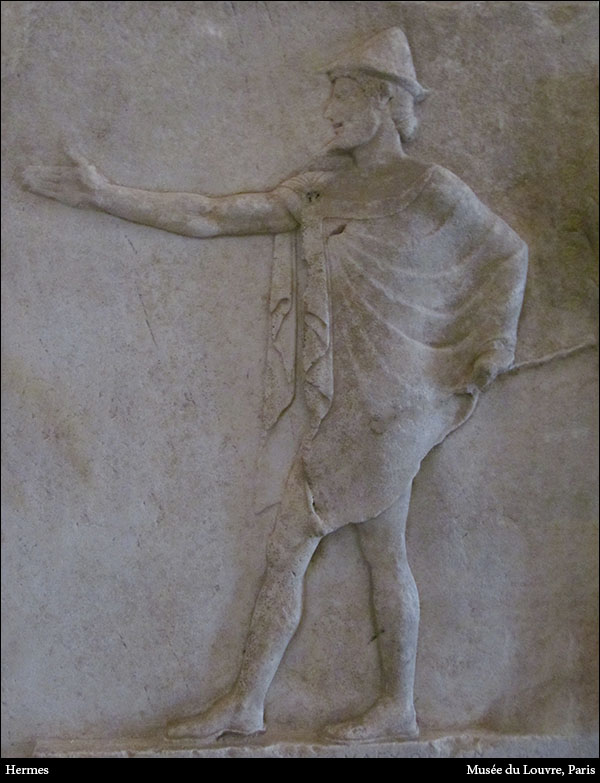
The Athenian hero Theseus became friends with King Peirithoos of the Lapiths. The two men shared a desire for adventure and questionable indulgences.
With the help of Peirithoos, Theseus kidnapped Helen of Argos when she was very young ... this was before she became Helen of Troy. For his assistance, Theseus promised to help Peirithoos find a wife. Peirithoos became infatuated with Kore, a.k.a. Persephone, and set out to "have" her ... there are two versions of what happened next:
1) The Kore Peirithoos wanted was a princess from Epirus ... her father was an eccentric man who called himself Aidoneus, which is another name for Hades. King Aidoneus captured the two rascals before any harm could come to his daughter and killed Peirithoos ... that's not exactly what Peirithoos intended but he did get to be with the real Kore after he arrived at the House of Hades.
2) Peirithoos wanted to kidnap the original Kore, queen of the dead ... he and Theseus descended into the Underworld with the insane idea of capturing Persephone and taking her back to Thessaly to become queen of the Lapiths. Needless to say, their plans fell apart ... Hades captured the two maniacs and took them prisoner ... Peirithoos was killed but Theseus was allowed to rejoin the living.
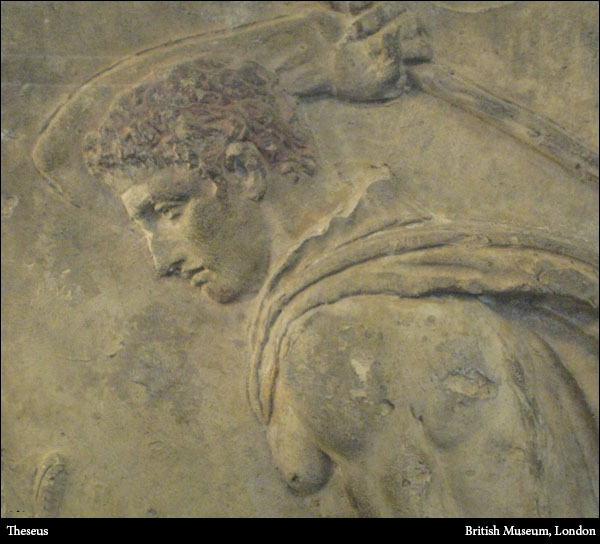
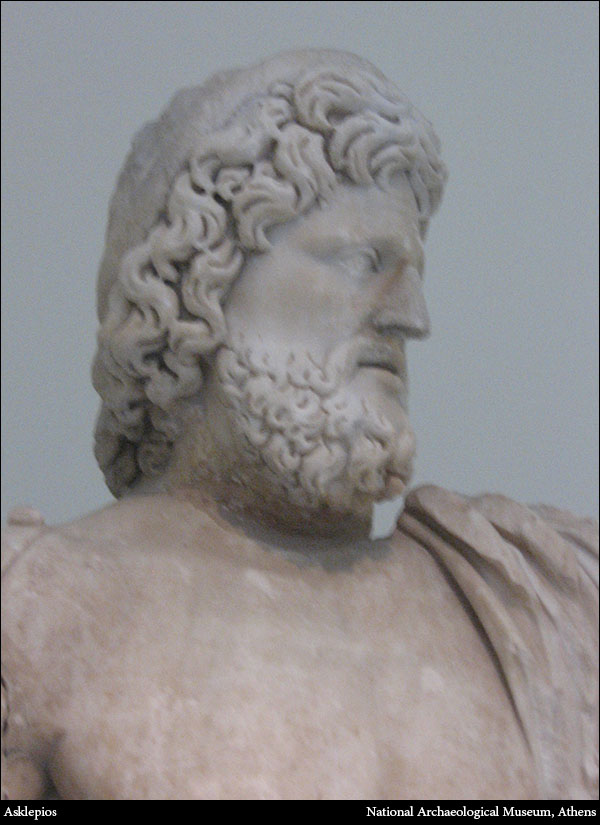
Asklepios was a son of the god Apollon and became the most skilled physician in the ancient world. His temple at Epidauros was the primary site for his seemingly miraculous cures and treatments ... his medical skills were so phenomenal that his snake-entwined staff became the universal symbol for the medical profession.
Asklepios became too enamored of his own talents and accepted money to return a dead man to life. Hades protested to Zeus that Asklepios' healing skills had already deprived him of many souls but now that he had started reanimating the dead, something had to be done. Zeus too was incensed by Asklepios' brazen egotism ... much to the chagrin of Apollon, Zeus struck Asklepios with a thunderbolt and ended his otherwise noble life.
The Iliad by Homer
The Odyssey by Homer
Theogony by Hesiod
Works and Days by Hesiod
Catalogues of Women and Eoiae by Hesiod
Shield of Herakles by Hesiod
Great Eoiae by Hesiod
Hymn to Demeter II
Hymn to Aphrodite V
Thebaid
Returns
Battle of Frogs and Mice
Contest of Homer and Hesiod
The Histories by Herodotos
The Argonautika by Apollonius of Rhodes
Description of Greece by Pausanias
Library of History by Diodorus of Sicily