Homepage Site Search
Copyrighted Material—All Rights Reserved

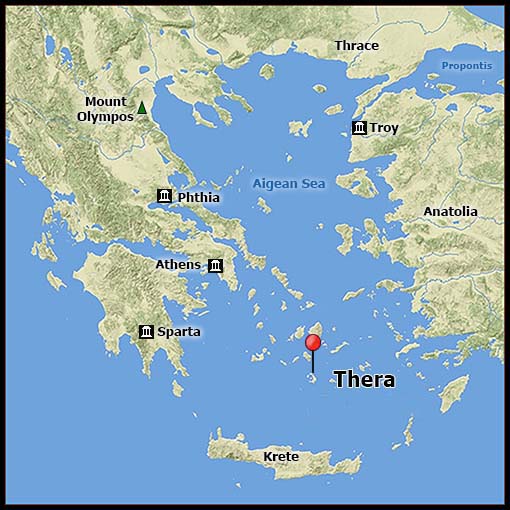
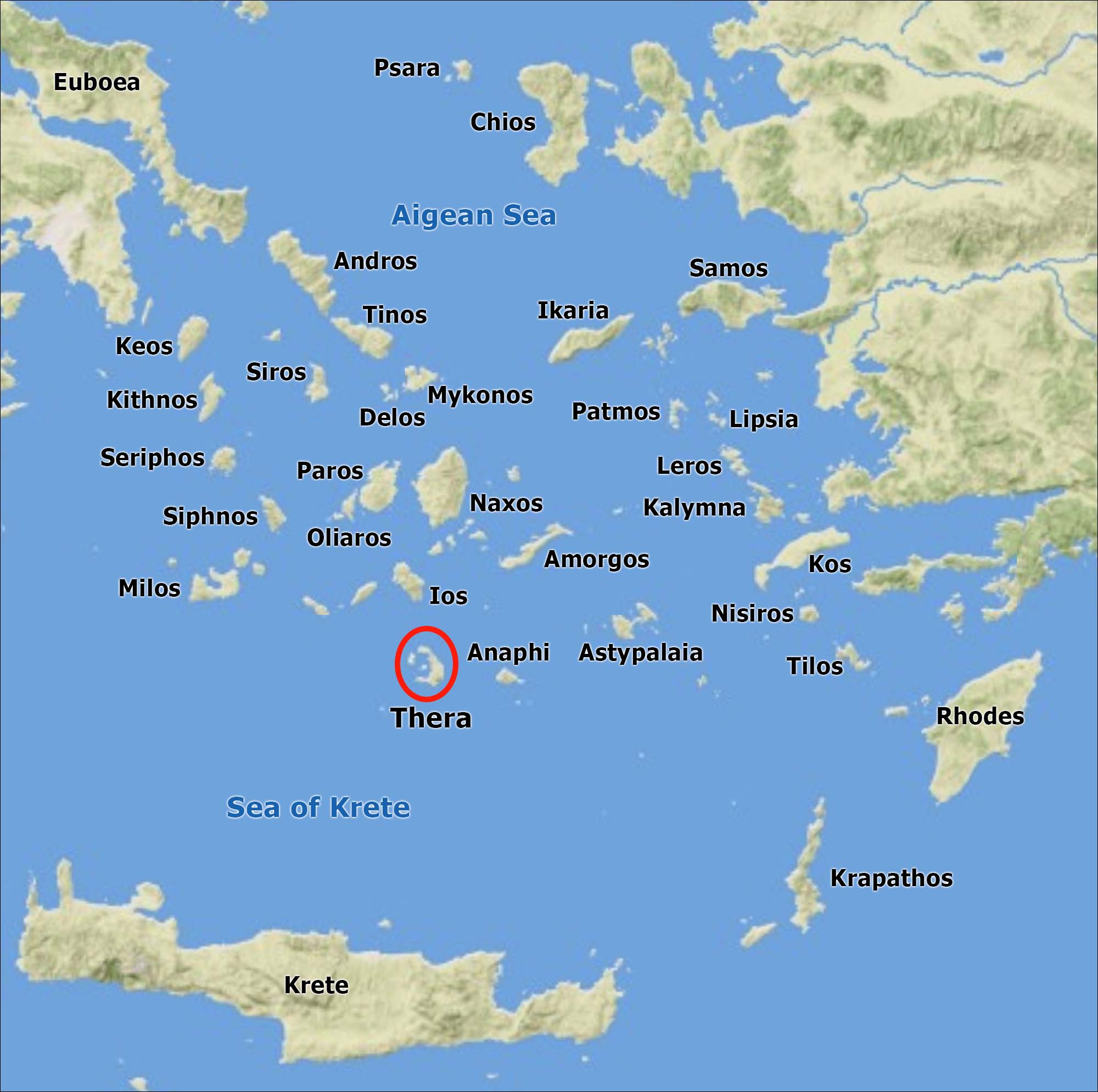
Calliste is the archaic name for the island of Thera; one of the Cyclades.1
Calliste means "most beautiful" and its creation is directly related to the Quest for the Golden Fleece by Ieson (Jason) and the Argonauts.
The Golden Fleece was from a flying ram created by Helios (Sun) and Nephele, a woman molded from cloud by the god Zeus. The Fleece was kept in the Garden of Ares in Kolchis (Colchis) at the eastern edge of Pontus (the Black Sea) and jealously guarded by King Aietes (Aeetes) of Kolchis. Ieson was tasked with retrieving the Fleece to claim his right to rule Iolkos (Iolcus) in Thessaly. With the blessings of the goddesses Athene (Athena) and Hera, a ship was built and named Argo; a crew was assembled and called Argonauts—Argo seamen.
The Fleece was acquired, perhaps "stolen" would be a better term, and the Argonauts fled Kolchis with Aietes' navy in ardent pursuit. Ieson evaded capture by ambushing and murdering King Aietes son. Even though Athene and Hera tried to protect Ieson, Zeus inflicted one hardship after another on the Argonauts for Ieson's cowardly deed.
Stranded in the Libyan desert, the Argonauts were aided by the son of the sea god Triton who gave an Argonaut named Euphemus a clod of dirt that, when thrown into the sea, would become the island home of Euphemus' descendants.
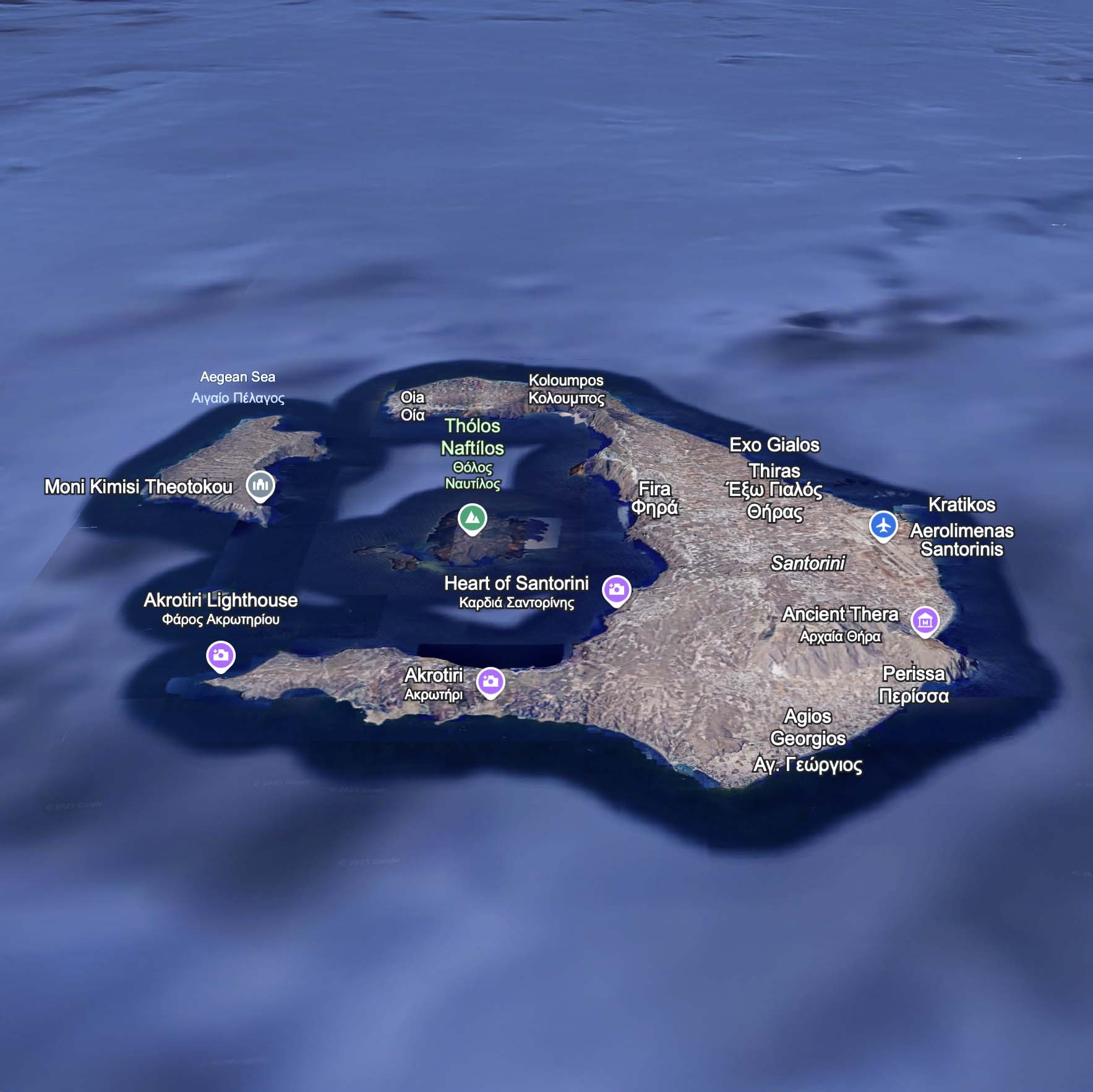
The dirt clod given to Euphemus found its way into the sea at a spot where in 1604 BCE a volcanic eruption had essentially left a blank space in the Aigean (Aegean) Sea where Calliste would come into existence. The volcanic eruption happened approximately 300 years before the Quest for the Golden Fleece.
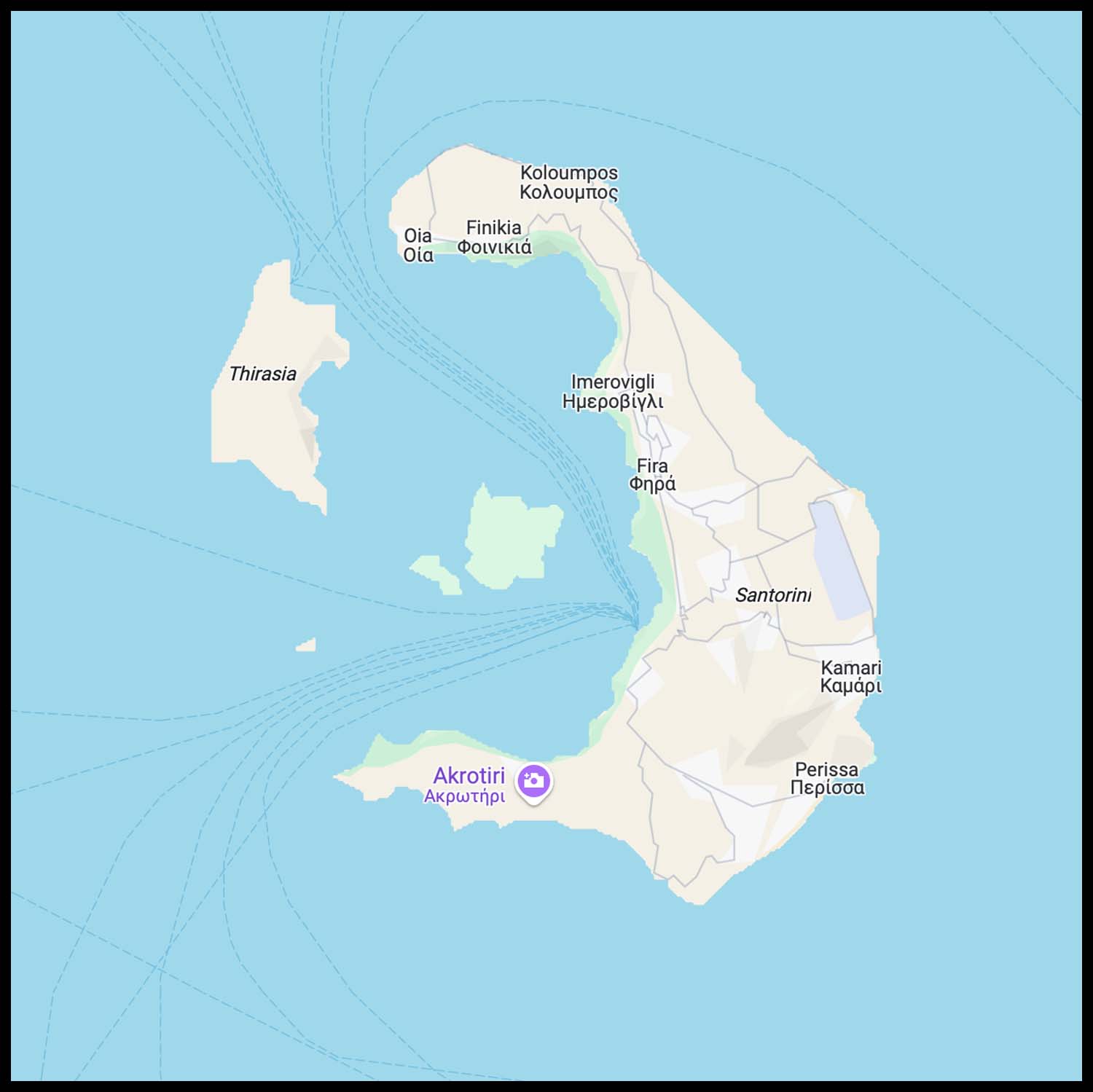
Generations after Calliste rose from the depths, a descendant of Euphemus named Theras founded a Spartan colony on the island and changed the name to Thera, after himself. Thera has been the name of Calliste since that time. Approximately AD 1400, the Romans began calling the island Santorini because there was a church on the island dedicated to Saint Irene.
Besides being beautiful and picturesque, Thera is noted for the archeological ruins of the pre-volcano Minoan city, Akrotiri. Apparently there was enough forewarning of the impending eruption to allow the inhabitants of Akrotiri to evacuate their city before the devastating blast. Volcanic ash covered the city thus preserving many buildings but, unlike Pompeii, no human remains have been found in the buried city. The remaining artifacts and artwork have provided a unique glimpse into daily life on the island. The written language preserved at Akrotiri is Linear A, which has only been deciphered on a rudimentary level.
1. Cyclades—the group of islands that "circle around" the sacred island of Delos.
Latitude North, Longitude East
| References: Diodorus of Sicily, The Library of History book 12.5 Pindar, Pythian Ode 5 Introduction Herodotos, The Histories book 4.148–153 Pausanias, Description of Greece book 14.3 book 15.7 book 16.6 Apollonius of Rhodes, Argonautica book 4, lines 1741–1764 Pliny the Eder, Natural History book 2.139 Strabo, Geography book 1.2.40 book 1.3.16 book 8.3.19 book 10.5.1 book 17.3.21 |