Homepage Site Search
Copyrighted Material—All Rights Reserved

Geography Index
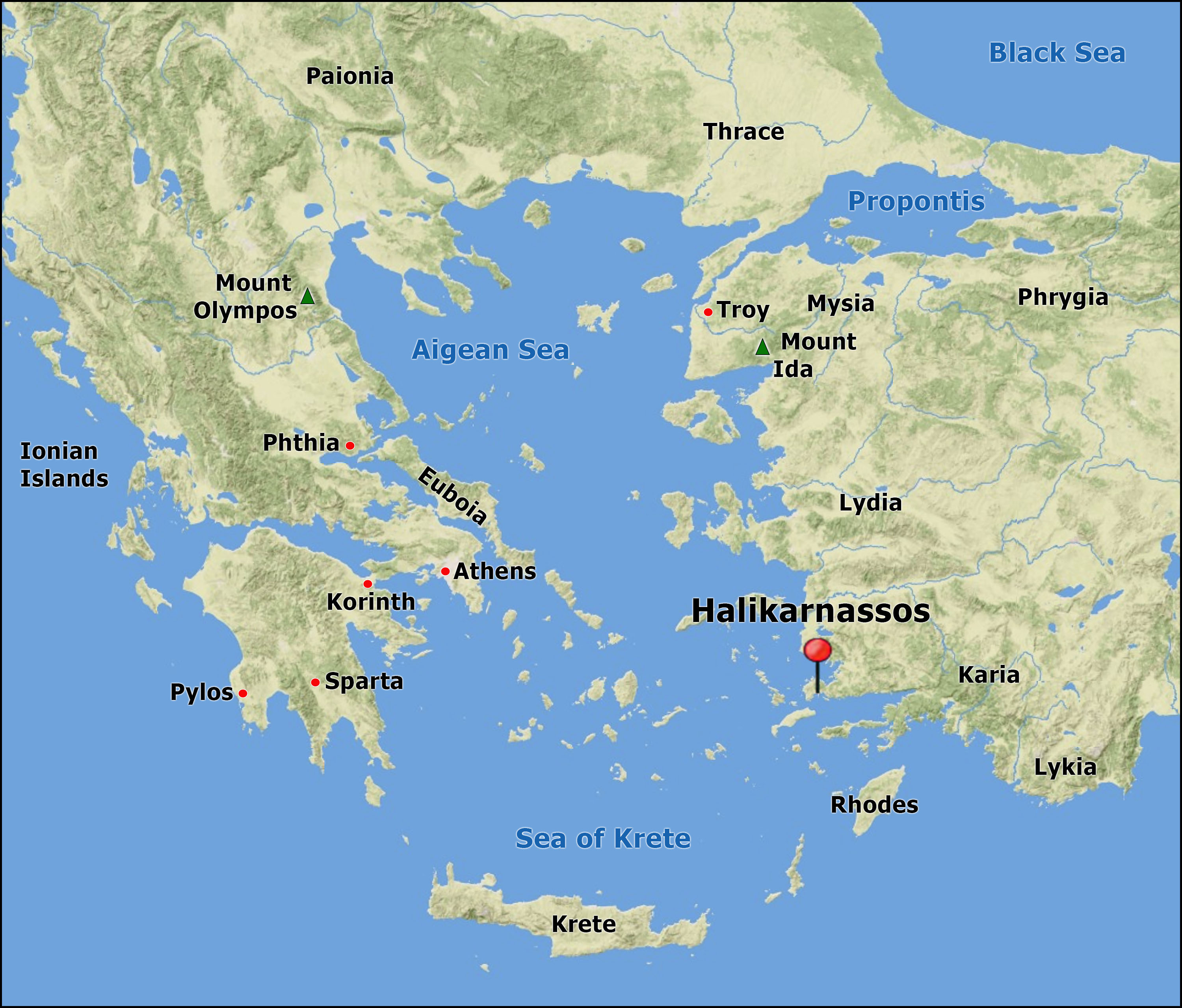
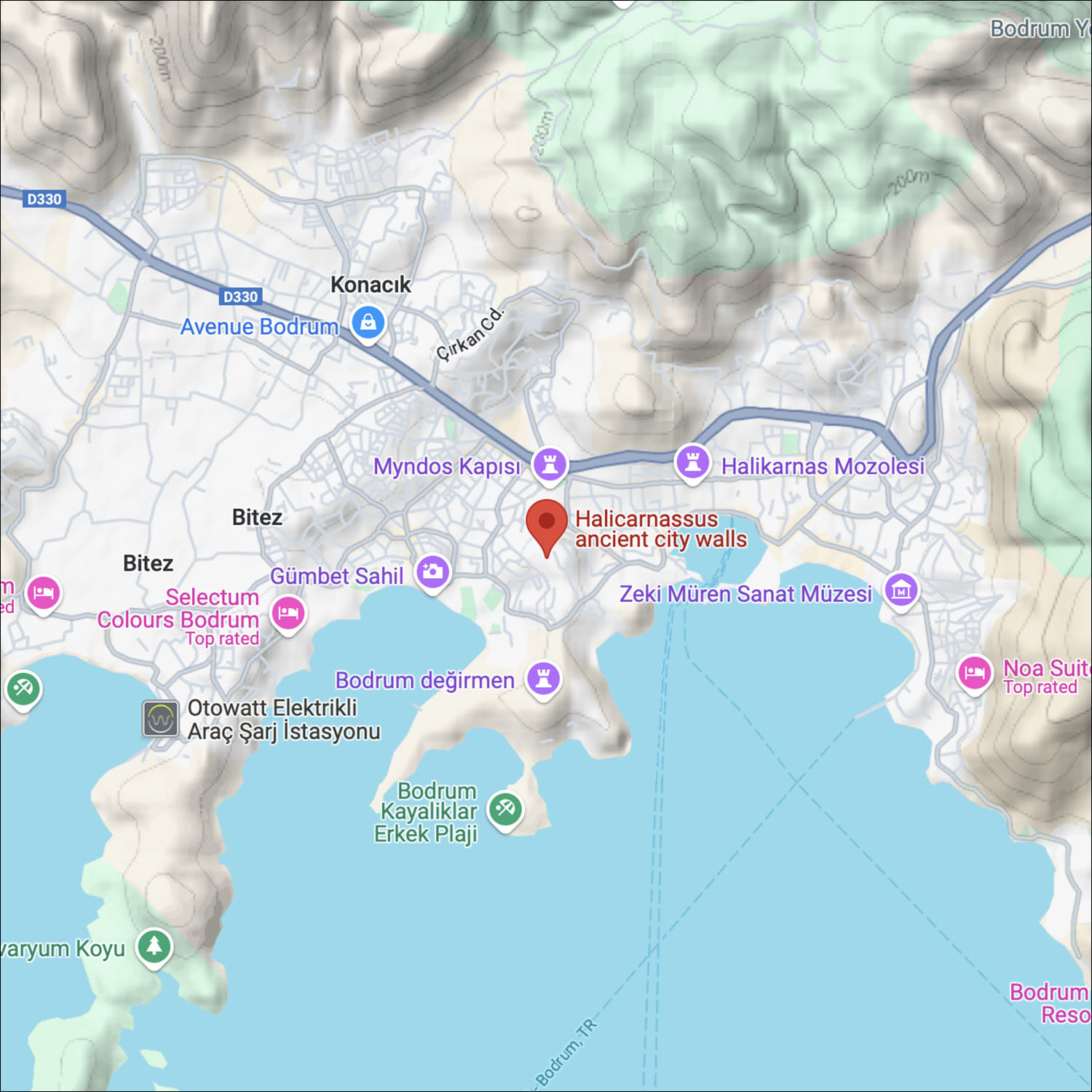
A Doric city near the coast of Karia (Caria).
Halikarnassos was established as a colony by the descendants of Aetius, son of Anthas, who were from Troezen on the Peloponnesian Peninsula.
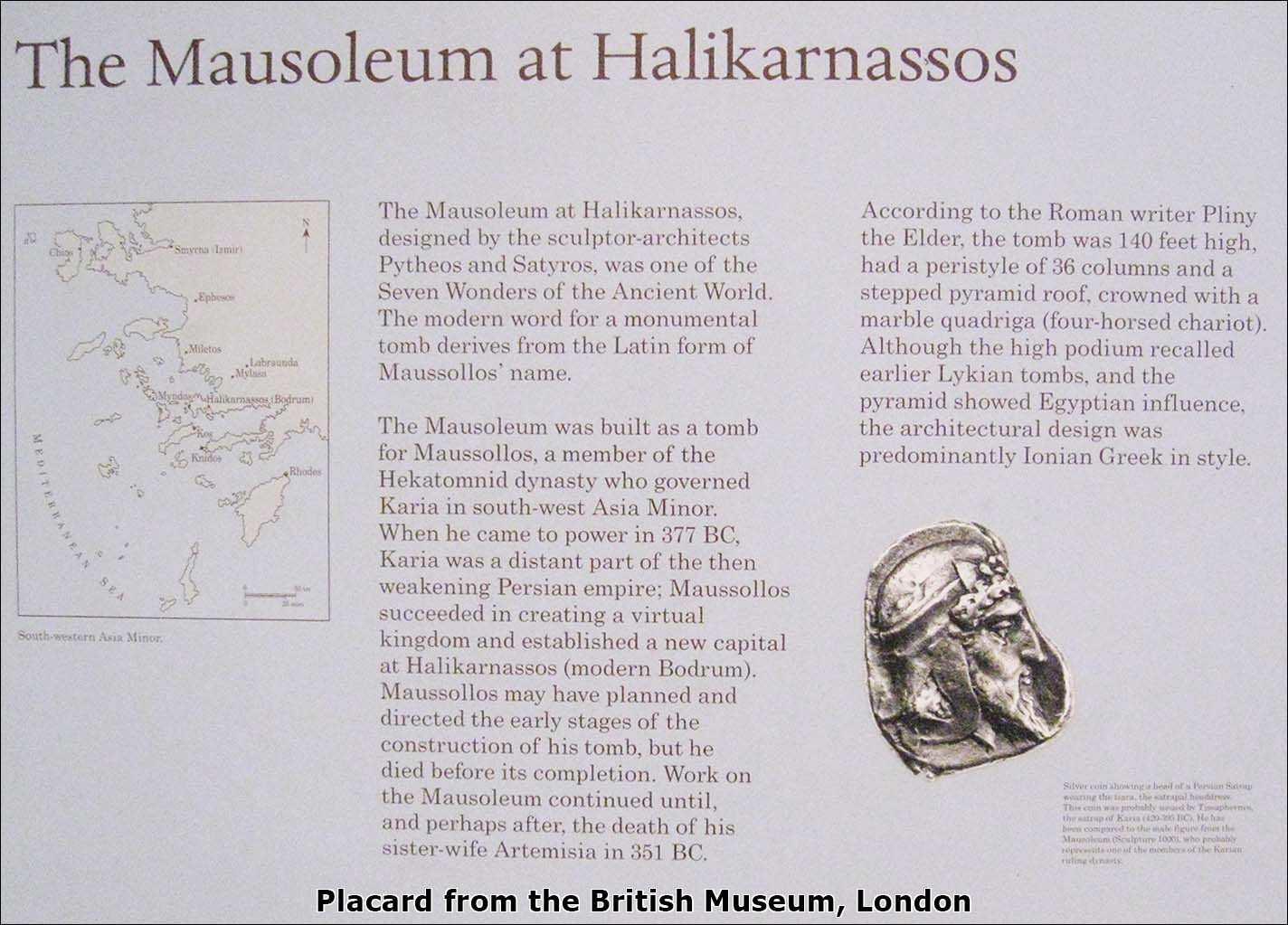
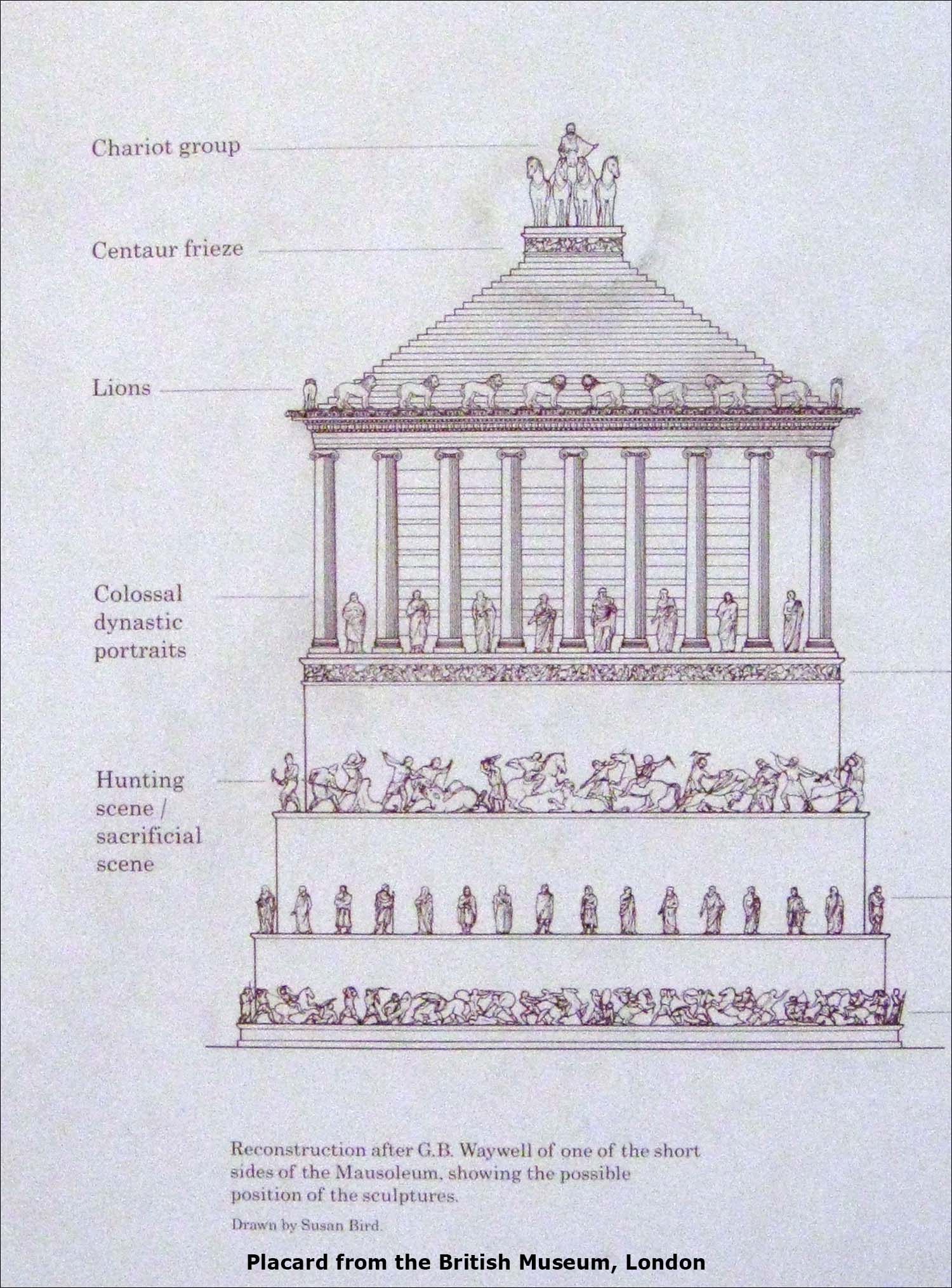
Halikarnassos was noted as the birthplace of the historian, Herodotos (Herodotus), and the site of one of the Seven Wonders of the Ancient World,1 the Tomb of Mausolus.
The Tomb of Mausolus at Halicarnassus was so magnificent that all subsequent grand burial structures were called Mausoleums. Mausolus was a satrap (governor) of Karia who ruled from circa 377 to 353 BCE. Construction of his tomb began after his death by his sister-wife Artemisia. The ashes of Artemisia and Mausolus were placed in the tomb.
The historian Pliny the Elder speculated that the art of cutting marble into thin slabs was first used on the Tomb of Mausolus in Halikarnassos. The distinctive marble with a white background and parallel gray or black linear veins had been imported from the island of Marmora in Propontis (the Sea of Marmara).
1. The Great Pyramid of Giza, the Hanging Gardens of Babylon, the Statue of Zeus at Olympia, the Temple of Artemis at Ephesus, the Mausoleum at Halicarnassus, the Colossus of Rhodes, and the Lighthouse of Alexandria
Latitude North, Longitude East
37.0344, 27.4147
| References: Strabo, Geography book 14.2.16–17 Diodorus of Sicily, The Library of History book 14.36.2; book 15.90.3 Pausanias, Description of Greece book 8.16.4 Pliny the Elder, Natural History book 34 |