Homepage Site Search
Copyrighted Material—All Rights Reserved

Geography Index
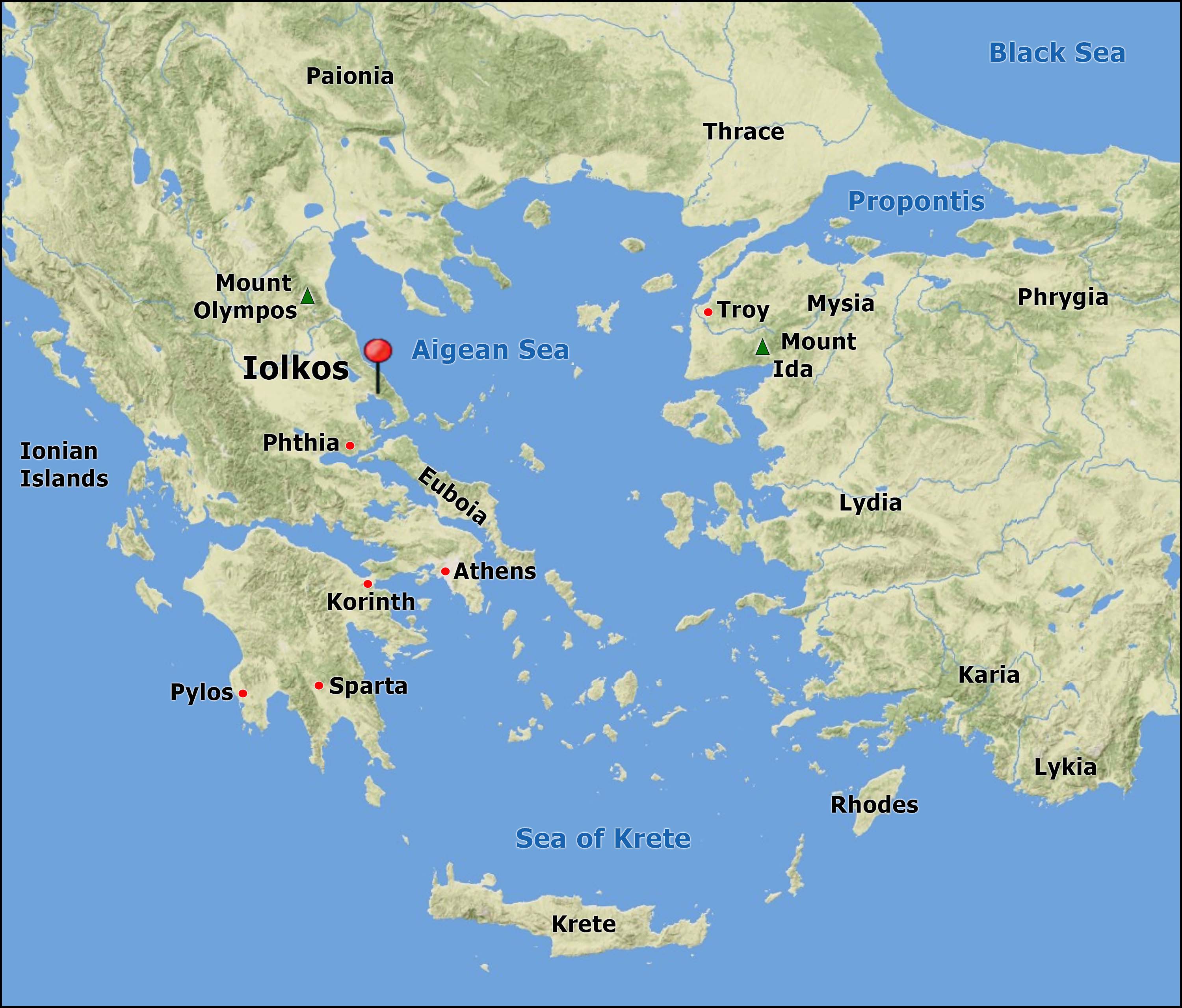
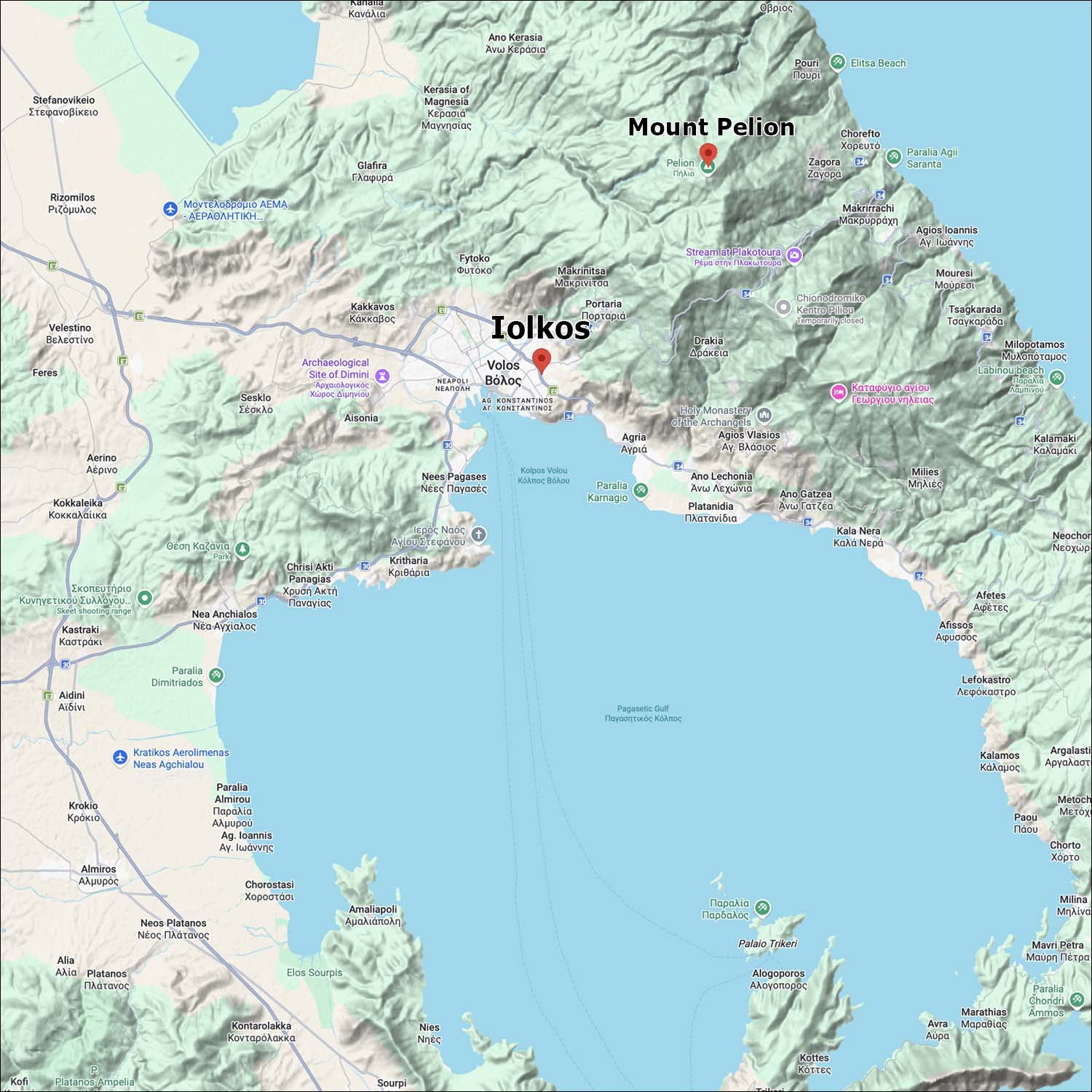
A coastal city on the northern Pagasetic Gulf.
Iolkos was founded approximately three generations before the Trojan War by a man named Kretheus (Cretheus); that would have been approximately 1340 BCE. Kretheus married his niece Tyro but she developed a passion for the river-god, Enipeus. Poseidon, lord of the sea, noted what was happening and took the guise of Enipeus to make love to Tyro. She conceived twin sons but did not want to keep them. She took the infants into the wilderness and abandoned them. The children were found by some horse-keepers after one of their mares accidentally kicked one of the babes. The livid mark on the baby's face prompted the horse-keepers to name him Pelias, which indicated the purple scar on the child's face. They named the other child Neleus.
Kretheus and Tyro had three sons—Aeson, Amythaon, and Pheres. Reaching maturity, Pelias and Neleus discovered their heritage and found out that their stepmother, Sidero, had imprisoned and tortured Tyro. They swore revenge and chased Sidero to a sanctuary of the goddess Hera. Pelias entered the scared sanctuary and killed Sidero at the altar. Hera's wrath followed Pelias throughout his life and culminated in his horrible death.
After Kretheus died, Pelias assumed the kingship of Iolkos and banished his brother Neleus from Thessaly. With a band of followers, Neleus went to the Peloponnesian Peninsula and founded the city of Pylos (Pylus). To retain the throne of Iolkos, Pelias had to discredit Tyro's other sons and their children, which is where Ieson (Jason), son of Aeson, entered the story.
To be rid of Ieson, Pelias challenged him to retrieve the Golden Fleece from Kolchis (Colchis) at the eastern edge of Pontus (the Black Sea). The Golden Fleece was from a flying ram created by the god Helios. Possession of the Fleece imparted divine approval to the bearer. Ieson accepted the challenge and with the assistance of the goddesses Athene (Athena) and Hera, assembled a magnificent crew of heroes and built the Argo—the finest ship to ever sail the sea.
King Aietes (Aeetes) of Kolchis would not surrender the Fleece voluntarily, which required Ieson to steal it. In addition to the Fleece, Ieson took Aietes' daughter Medeia. She was the granddaughter of Helios (Sun) and used her magical powers to willingly help Ieson steal the Fleece and escape capture by her father's army and navy.
Ieson's return to Iolkos was a tragic and noble affair. In Ieson's absence, Pelias had arranged for the death of Ieson's father, Aeson. The only way to enter the city was by force and Ieson did not have enough men to breach the city's defenses. Medeia devised a plan that would ensure the death of Pelias and grant Ieson entry into the city.
Pelias had four children—a son and three daughters—Akastos (Acastus), Alkestis (Alcestis), Amphinome, and Euadne. Pelias' son Akastos joined Ieson on the Quest for the Golden Fleece and was not in the city when Ieson returned. Medeia donned a disguise and using drugs and spells, convinced Pelias and his daughters that she could restore his youth. Medeia drugged Pelias and compelled Amphinome and Euadne to dismember their father. Pelias was dead and Ieson entered the city unopposed.
Ieson acknowledged the horrendous crime committed against Pelias and convinced Amphinome and Euadne that they had been bewitched and were not to blame for their actions. Akastos, Pelias' only son, became king of Iolkos and expelled Ieson and Medeia from the city.
During the Trojan War, Eumelos, the son of Admetos (Admetus) and Alkestis (Alcestis), led the Achaian (Achaean) soldiers from Iolkos, Boibe (Boebe), Glaphyrai (Glaphyrae), Pherai (Pherae), and the vicinity of the Boibeis Lake.
Latitude North, Longitude East
39.3663, 22.9688
| References: Homer, Iliad book 2, line 712 |