Homepage Site Search
Copyrighted Material—All Rights Reserved

Geography Index
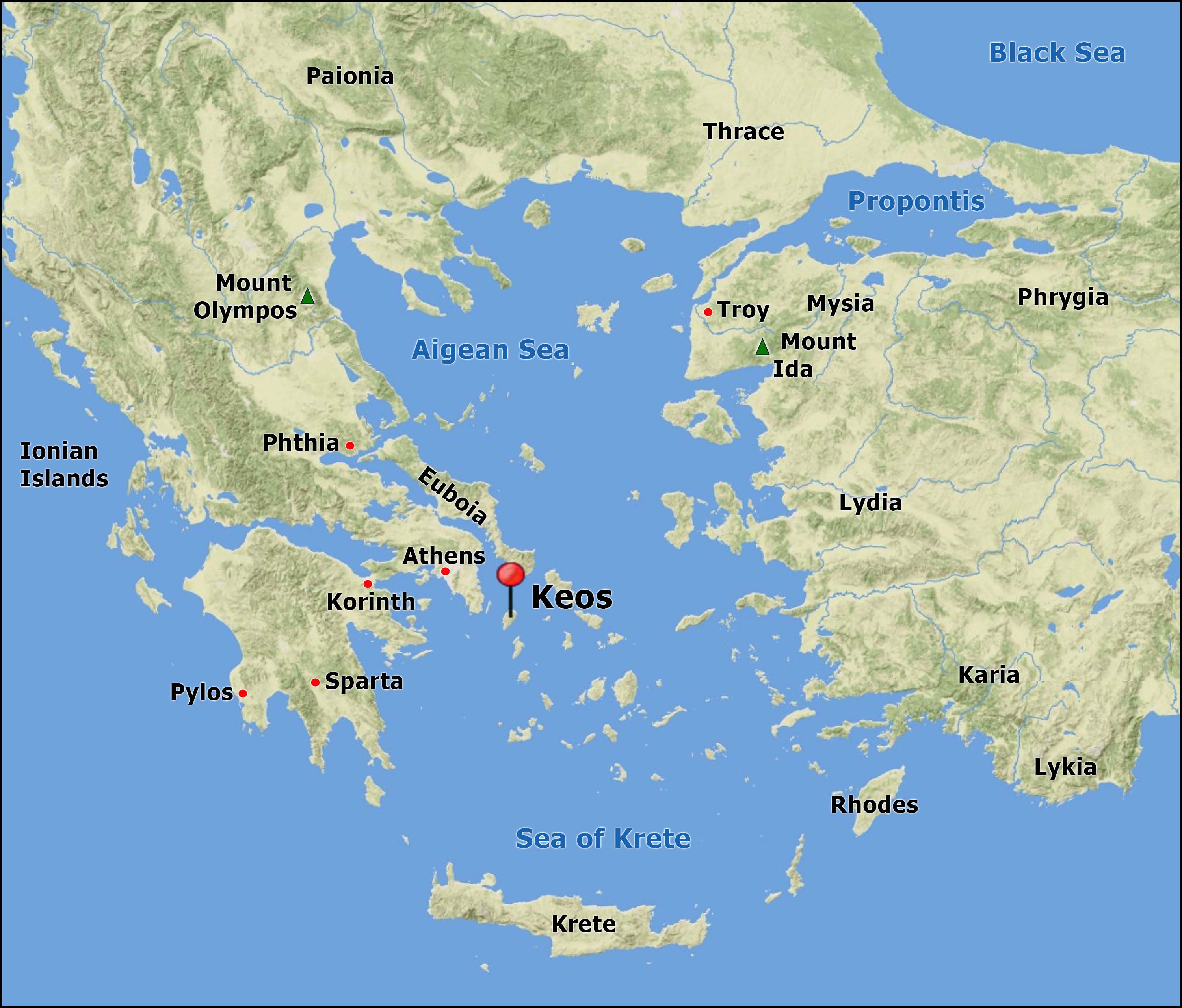
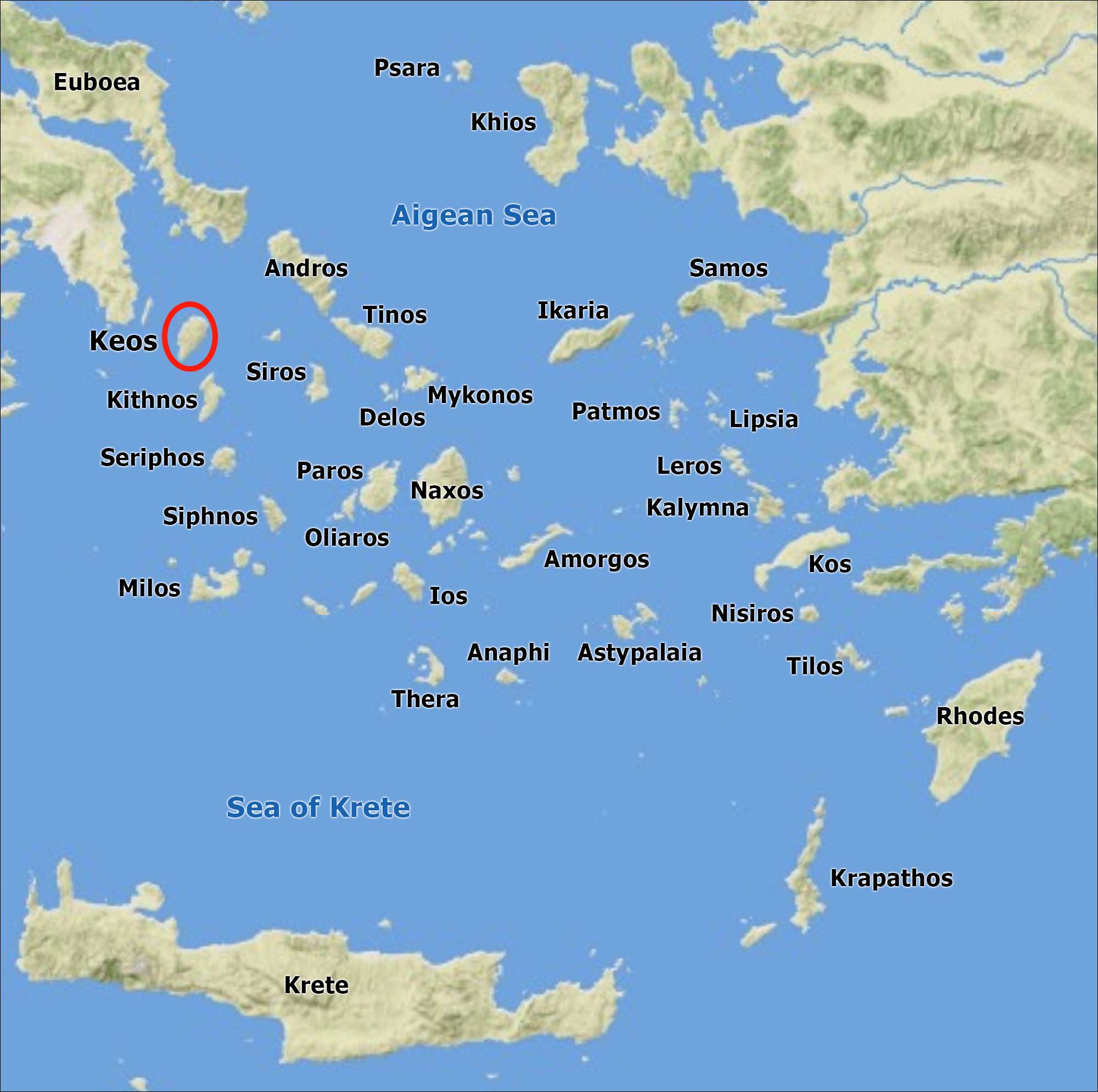
An island in the Aigean (Aegean) Sea; one of the Cyclades.1
Keos has had a variety of names but Hydrusa seems to be the most descriptive, implying an abundance of springs. Using the name Kea (Cea), the Roman historian Pliny the Elder (first century BCE) said that Keos had been torn off from of the island of Euboia (Euboea).
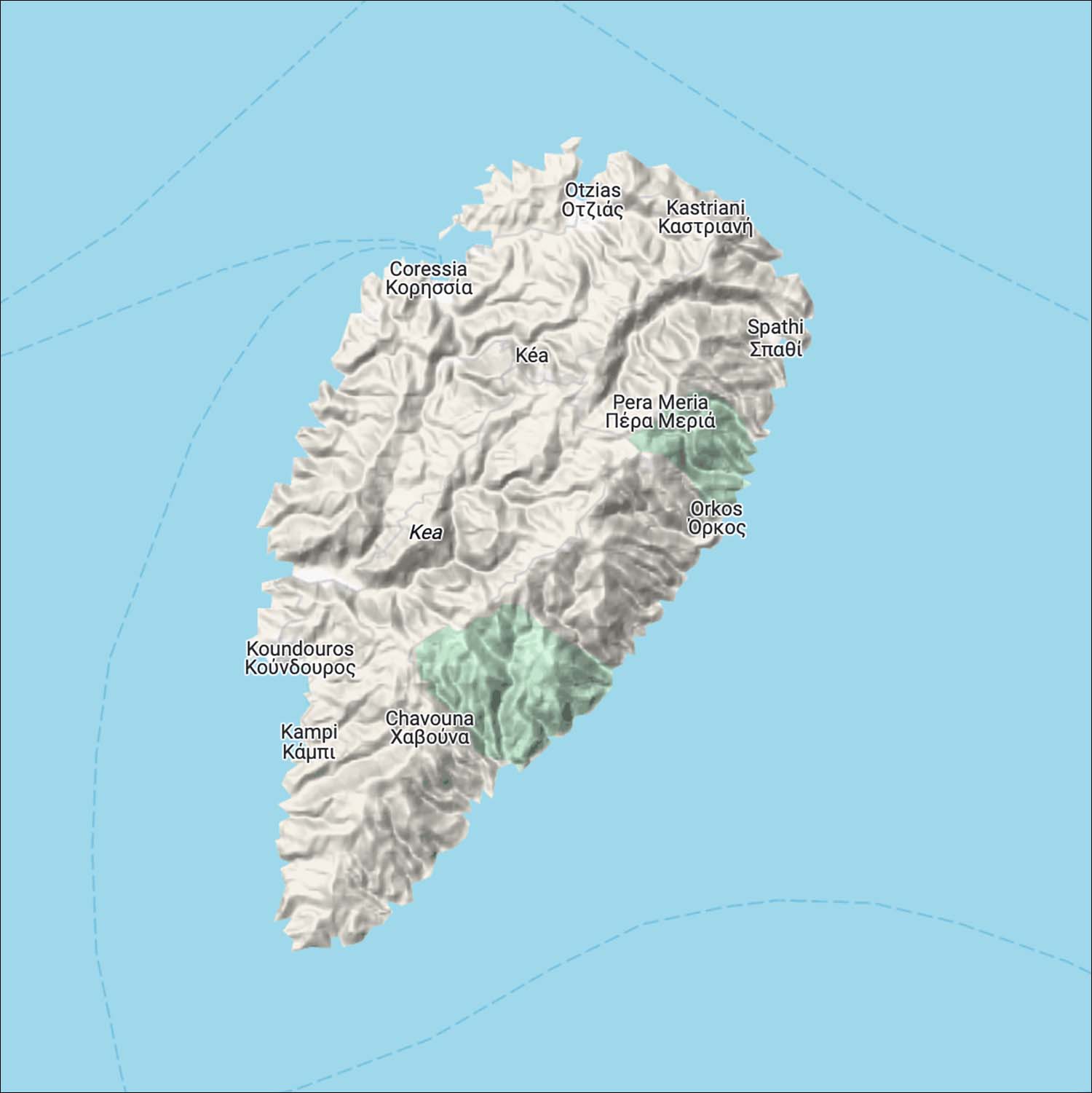
The four major cities of Keos were incorporated into to two—Iulis and Karthaia (Carthaea). The poets Simonides and his nephew Bacchylides, Erasistratus the physician, and Ariston the peripatetic philosopher were natives of Keos.
The geographer Strabo (first century BCE) reported a curious and unique law enacted on Keos. To endure what they perceived to become a protracted siege by the Athenians, a law was passed requiring elderly citizens to commit suicide by drinking hemlock. The purpose of this law was to save food and other resources so that younger residents could survive the siege. The date of this law is presumed to be shortly after the Athenian victory over the Persians at Marathon in 490 BCE.
1. Cyclades—the group of islands that "circle around" the sacred island of Delos.
Latitude North, Longitude East
37.6146, 24.3235
| References: Apollonius of Rhodes, Argonautica book 4, lines 520 and 526 Pliny the Elder, Natural History book 4.1.62 book 4.14.66 book 4.14.67 Strabo, Geography book 10.5.6 Menander, Kitharistes 12 |