Homepage Site Search
Copyrighted Material—All Rights Reserved

Geography Index
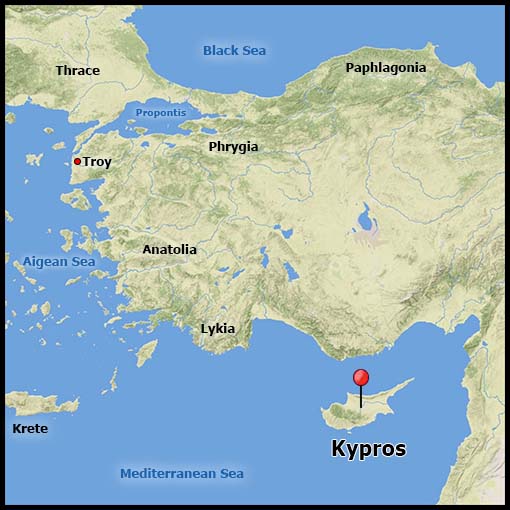
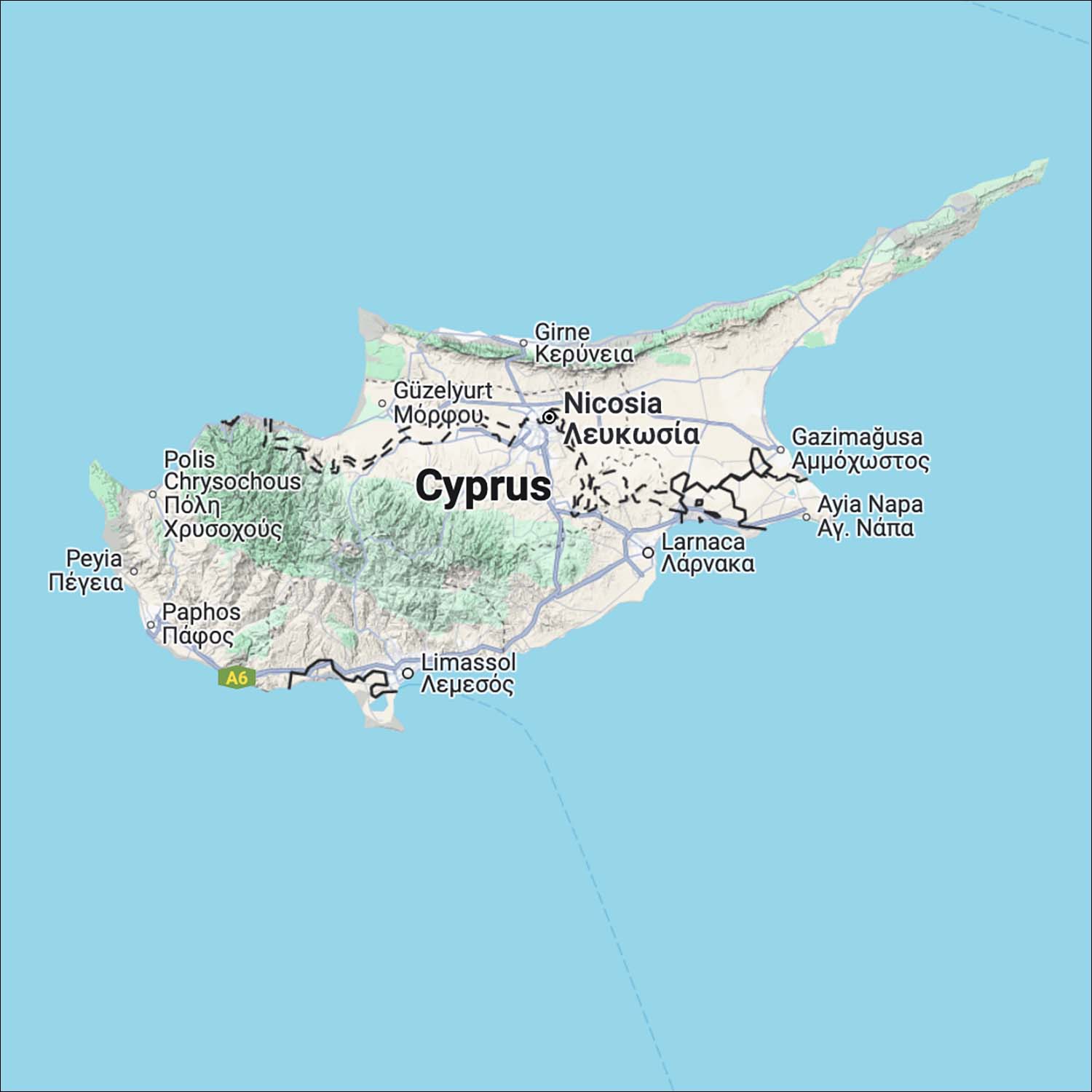
A large island in the eastern Mediterranean Sea.
Kypros was only mentioned once in the Iliad. Urgent for battle, Agamemnon, commander-in-chief of the Achaian (Achaean) army, donned his armor, which included a corslet presented to him by Kinyres (Cinyras) of Kypros.
Apollodorus (second century BCE) added to the story of Kinyres. Apparently, Odysseus and Agamemnon's herald, Talthybios (Talthybius), visited Kypros and asked Kinyres to support them in the assault on Troy. Kinyres gave them the corslet for Agamemnon and promised to send fifty ships. According to one version of events, Kinyres sent only one real ship and fashioned forty nine of clay and launched them in the sea. Another account, also by Apollodorus, says Kinyres sent no ships.
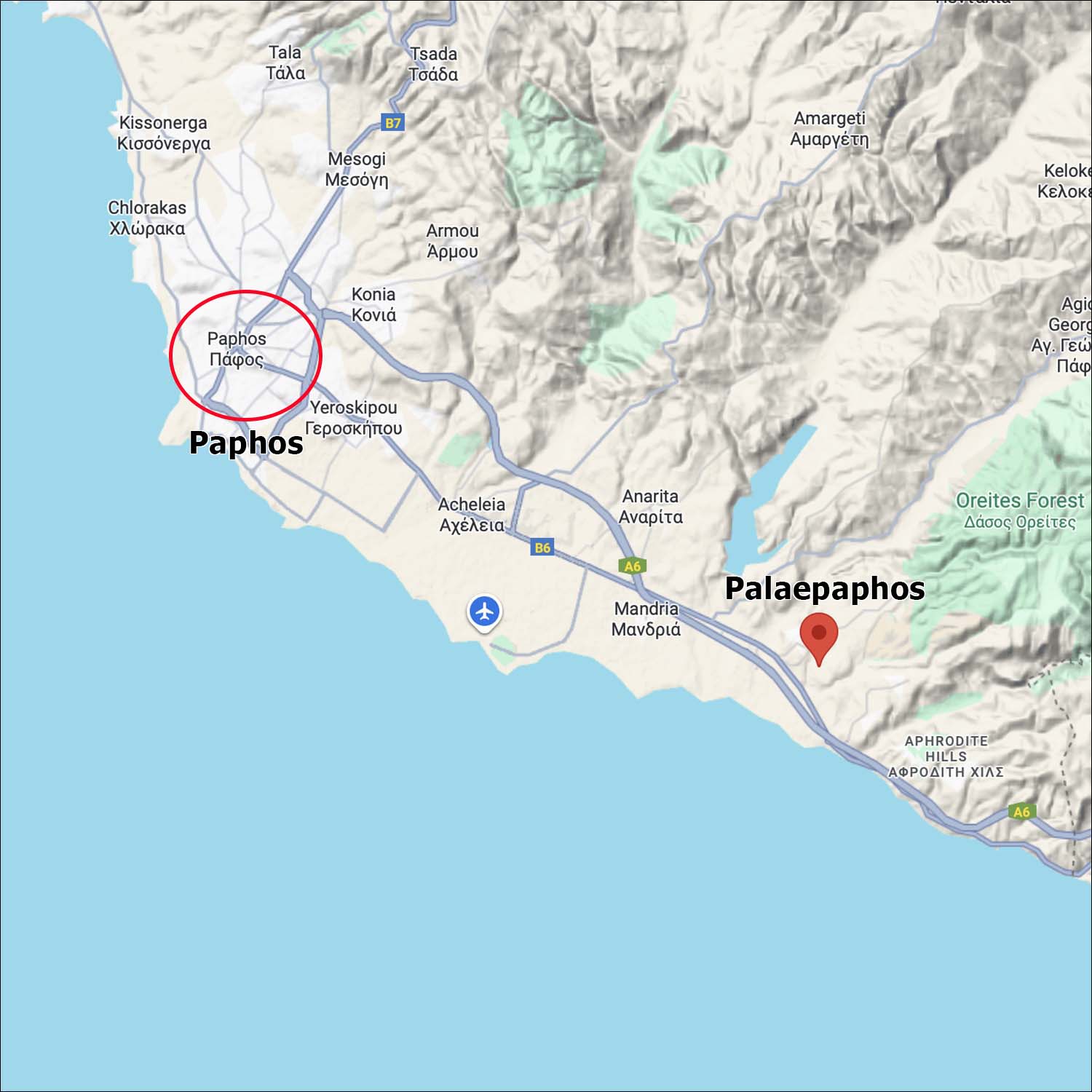
Kinyres was a notable character on Kypros. He was a blood relative five generations removed from Eos, goddess of the dawn. He founded the city of Paphos1 and married Metharme, daughter of King Pygmalion of Kypros. Among other children, Kinyres fathered Adonus, the beautiful and doomed consort of Aphrodite, goddess of love.
An interesting and tragic story revolved around a Kyprian prophet named Phrasius. King Busiris of Egypt sought advice from Phrasius about how to end nine years of scarcity in his kingdom. Phrasius told Busiris that if he sacrificed a foreigner every year, his woes would be over. Busiris took the advice to heart and sacrificed Phrasius because he was a foreigner.
Spawned by the blood of the god Ouranos (Uranus) and the foam of the sea, Aphrodite went ashore on Kypros and was thereafter called The Kyprian Goddess or simply Kyprian. Aphrodite was originally worshipped at Golgoi (Golgi) and then at Palaepaphos (Old Paphos).
1. According to Pausanias, Agapenor, commander of the Achaian (Achaean) soldiers from Arkadia (Arcadia), founded Paphos.
Latitude North, Longitude East
35.0622, 33.2266
| References: Homer, Iliad book 11, line 21 Apollodorus, The Library book 2.5.11; book 4.3.9 Pausanias, Description of Greece book 8.5.2 |