Homepage Site Search
Copyrighted Material—All Rights Reserved

Geography Index
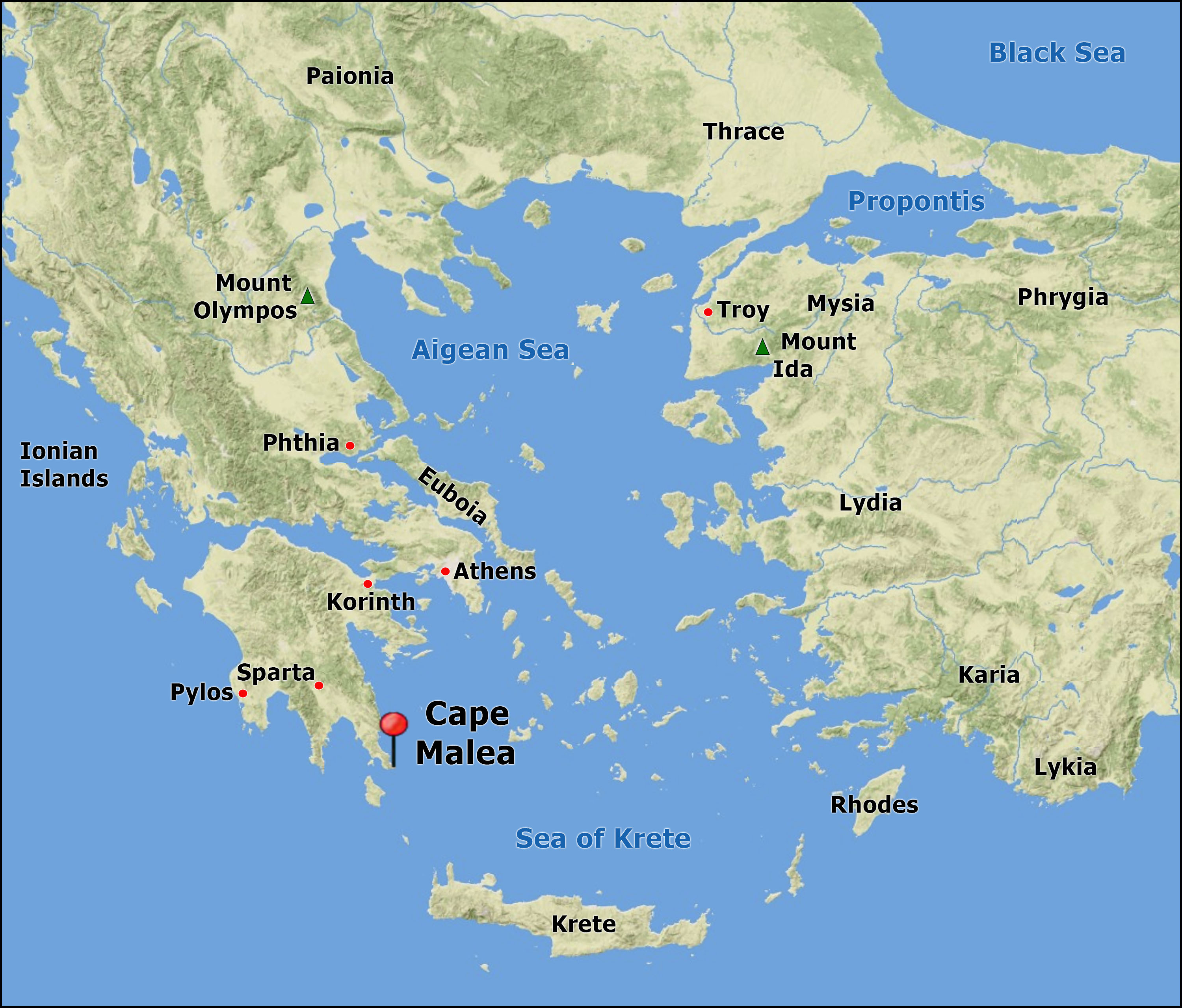
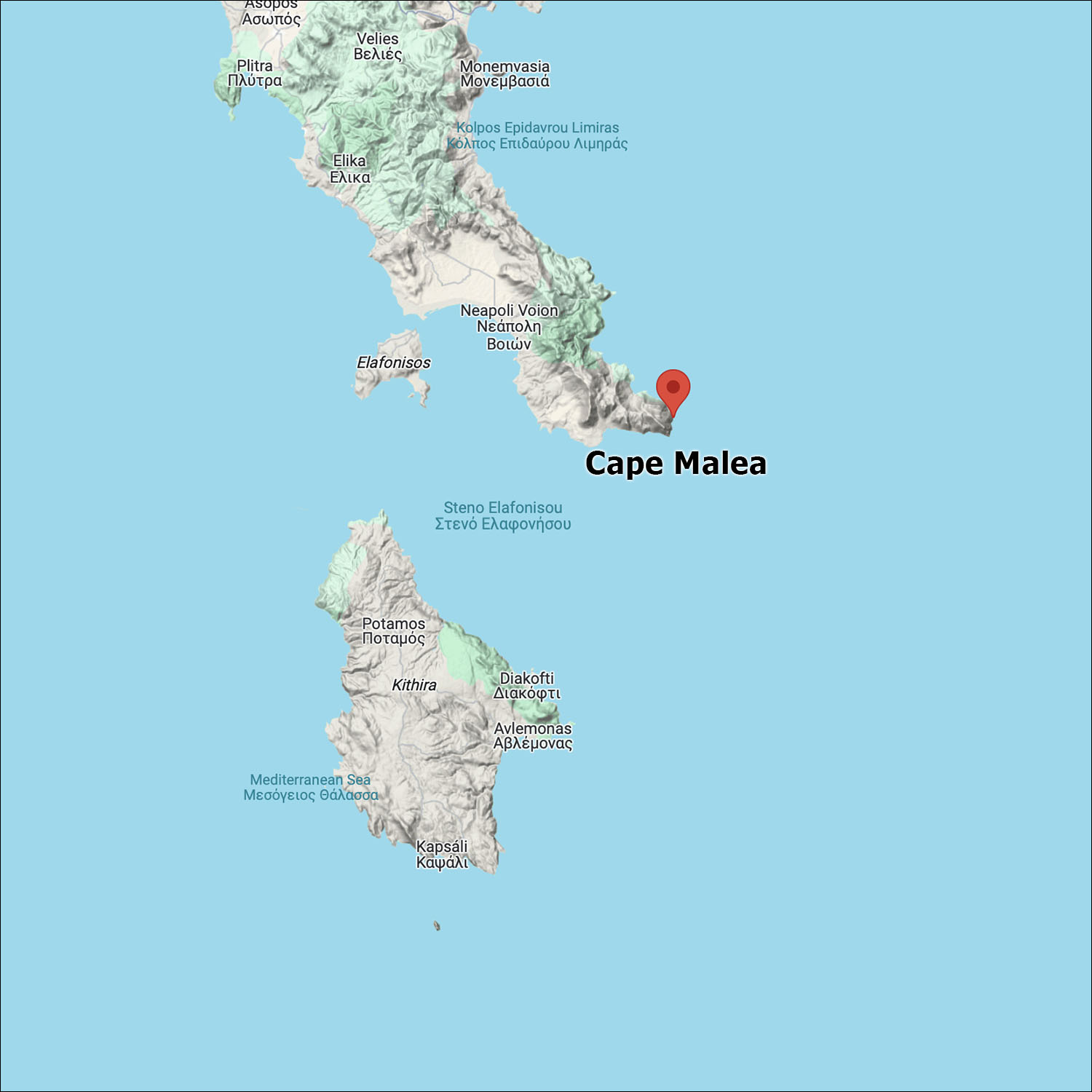
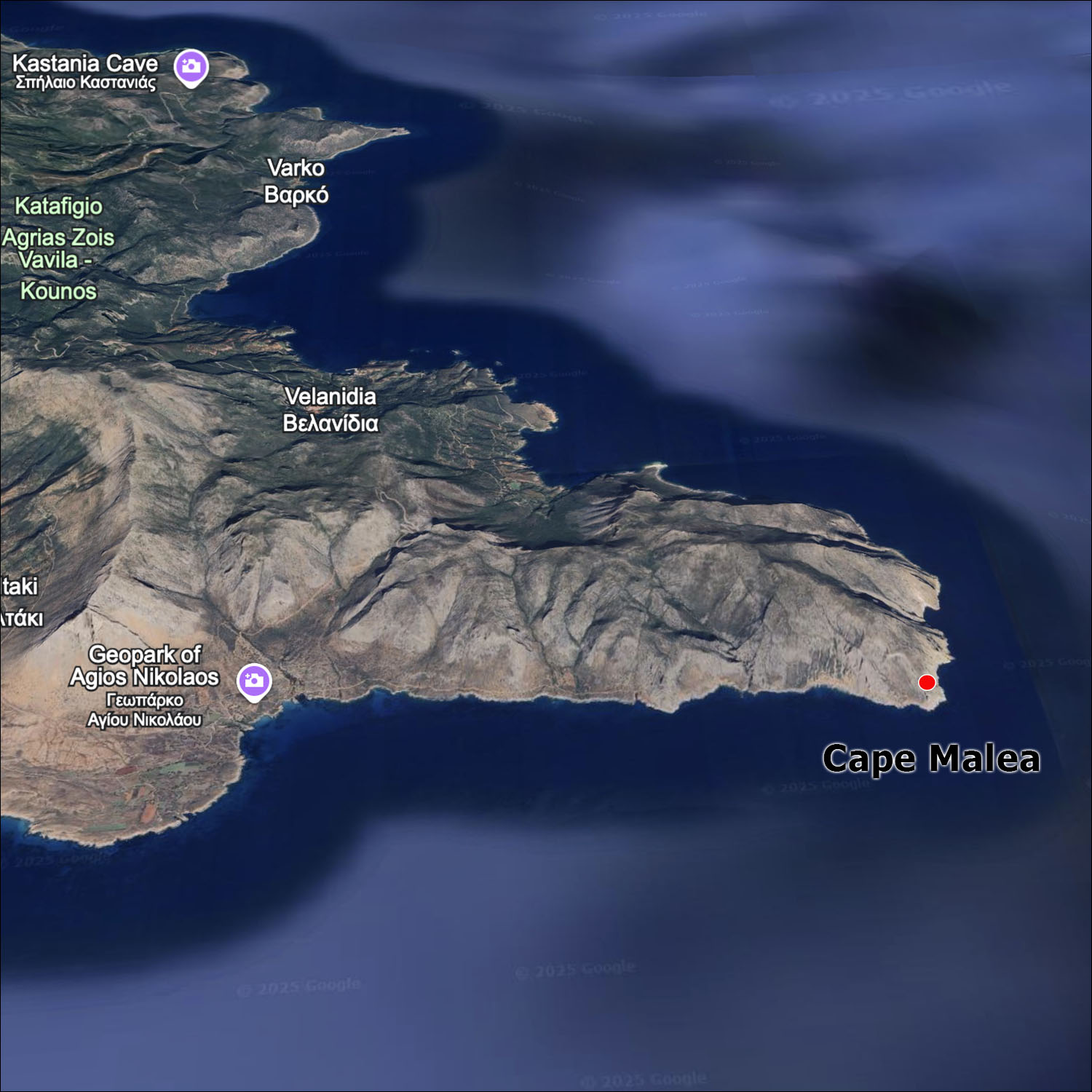
A distinctive cape on the south-eastern Peloponnesian Peninsula.
Cape Malea was a distinctive landmark to ancient sailors including the Greeks and the Romans. Sailing from east to west, Cape Malea denoted the arrival at the southern tip of the Peloponnesian Peninsula. A modern lighthouse now marks the cape.
Cape Malea was the home of the respected Centaur, Cheiron. As the tutor of Herakles (Heracles) and Achilles, Cheiron was noted for his wisdom and patience. Compared to the other Centaurs, Cheiron was unique in his civilized behavior. After the uncivilized Centaurs were forcibly ejected from the environs of Mount Pelion, they continued their lawless and barbaric activities until they encountered Herakles. He pursued the Centaurs to Malea where they took refuge with Cheiron. The frantic confrontation between Herakles and the Centaurs resulted in the unintentional wounding and eventual death of Cheiron. The time frame for this tragedy can by roughly dated to one generation before the Trojan War, circa 1475 BCE.
The poems of Homer mentioned Cape Malea as part of three pivotal events following the fall of Troy. These occurrences involved Agamemnon, Menelaos (Menelaus) and Odysseus.
Agamemnon, commander and chief of the Achaian (Achaean) army at Troy, survived the Trojan War only to be murdered by his wife Klytaimnestra (Clytemnestra) and his cousin Aigisthos (Aegisthus). His journey home from Troy was disrupted by rough seas and turbulent winds as he rounded Cape Malea but the goddess Hera intervened to help Agamemnon survive the rough seas and allowed him to return to Mycenae (Mykenai) and receive his cruel fate.
Sailing home from Troy with his plunder, Menelaos and his crewmen encountered a tragedy as they rounded Cape Sunium (Cape Sounion), south of Athens. The god Apollon killed Menelaos' helmsman Phrontis as part of a divine plot to delay Menelaos' homecoming. Phrontis was given a proper burial before Menelaos resumed his journey. As he approached the distinctive steep heights of Cape of Melea, the god Zeus assailed the fleet with fierce winds, forcing Menelaos to sail to the island of Krete (Crete) and eventually, Egypt.
Setting a course from Troy to Ithaka (Ithaca), Odysseus and his crewmen encountered rough seas and fierce winds in the northern Aigean (Aegean) Sea. Their sails were torn to shreds and they were forced to row their ships. As they rounded Cape Malea, Boreas (North Wind) and wild currents battered the helpless sailors for nine days pushing them far off their desired course. The winds abated and stranded Odysseus in the land (presumably, an island) occupied by lethargic people known as the Lotus-Eaters.
Latitude North, Longitude East
36.4503, 23.2016
| References: Homer, Odyssey book 3, line 287 book 4, line 514 book 9, line 81 book 19, line 187 Strabo, Geography book 1.2.17 book 2.4.8 Diodorus of Sicily, Library of History book 4.70.4 book 5.80.2 book 9.15.1 book 13.64.6 Pausanias, Description of Greece book 3.25.2 Hymn to Apollon line 409 Apollodorus, The Library book 2.5.4 |