Homepage Site Search
Copyrighted Material—All Rights Reserved

Geography Index
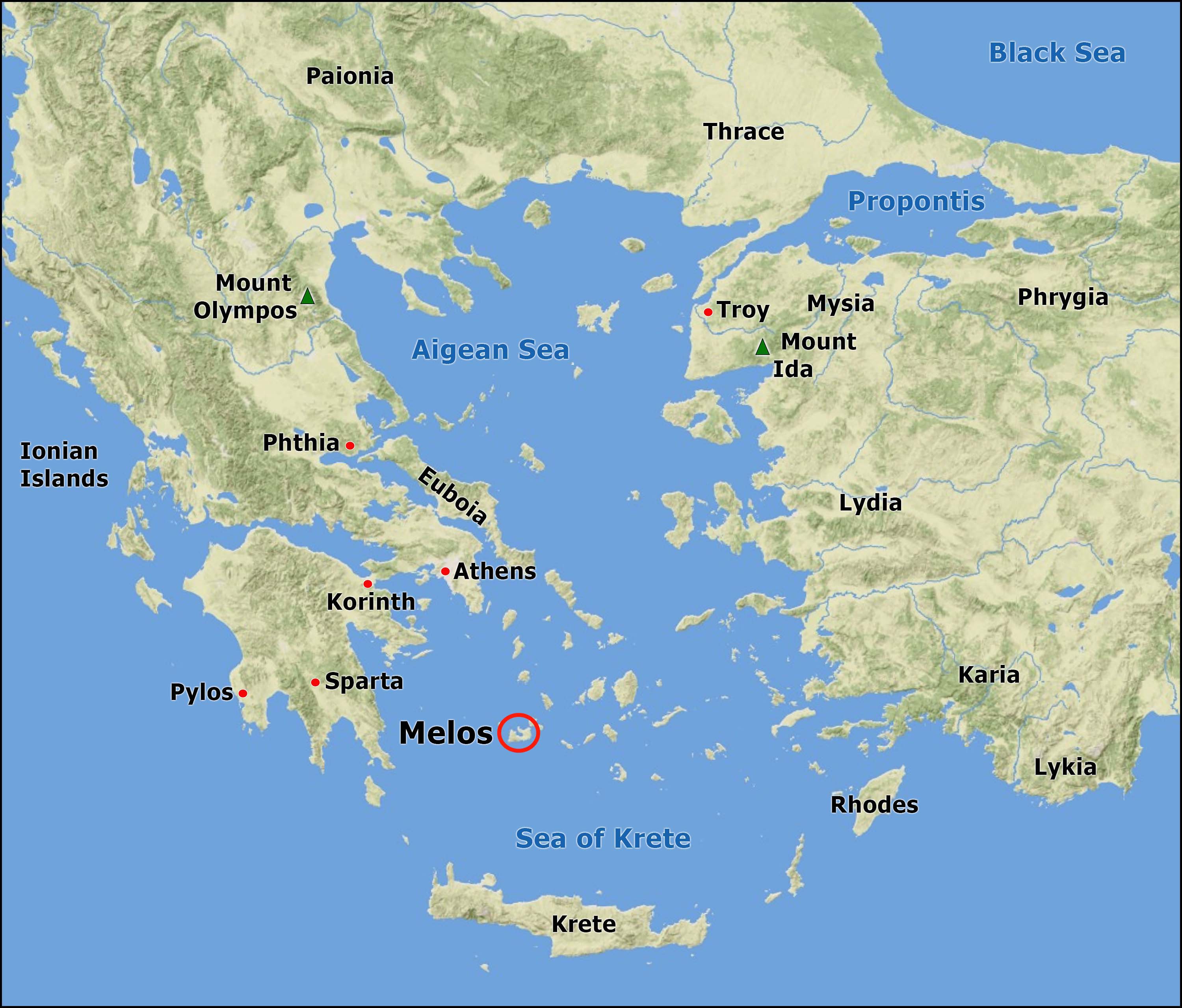
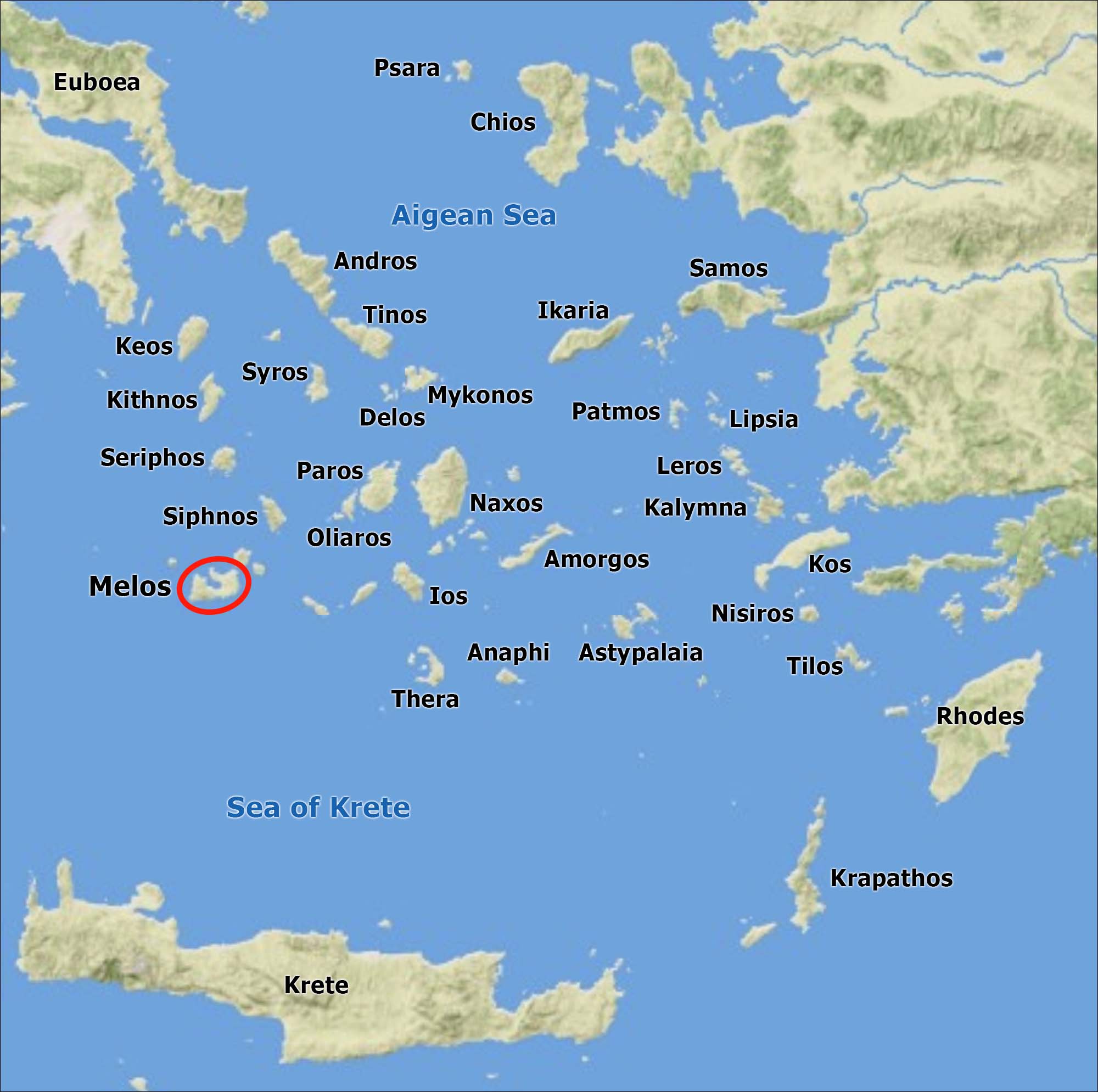
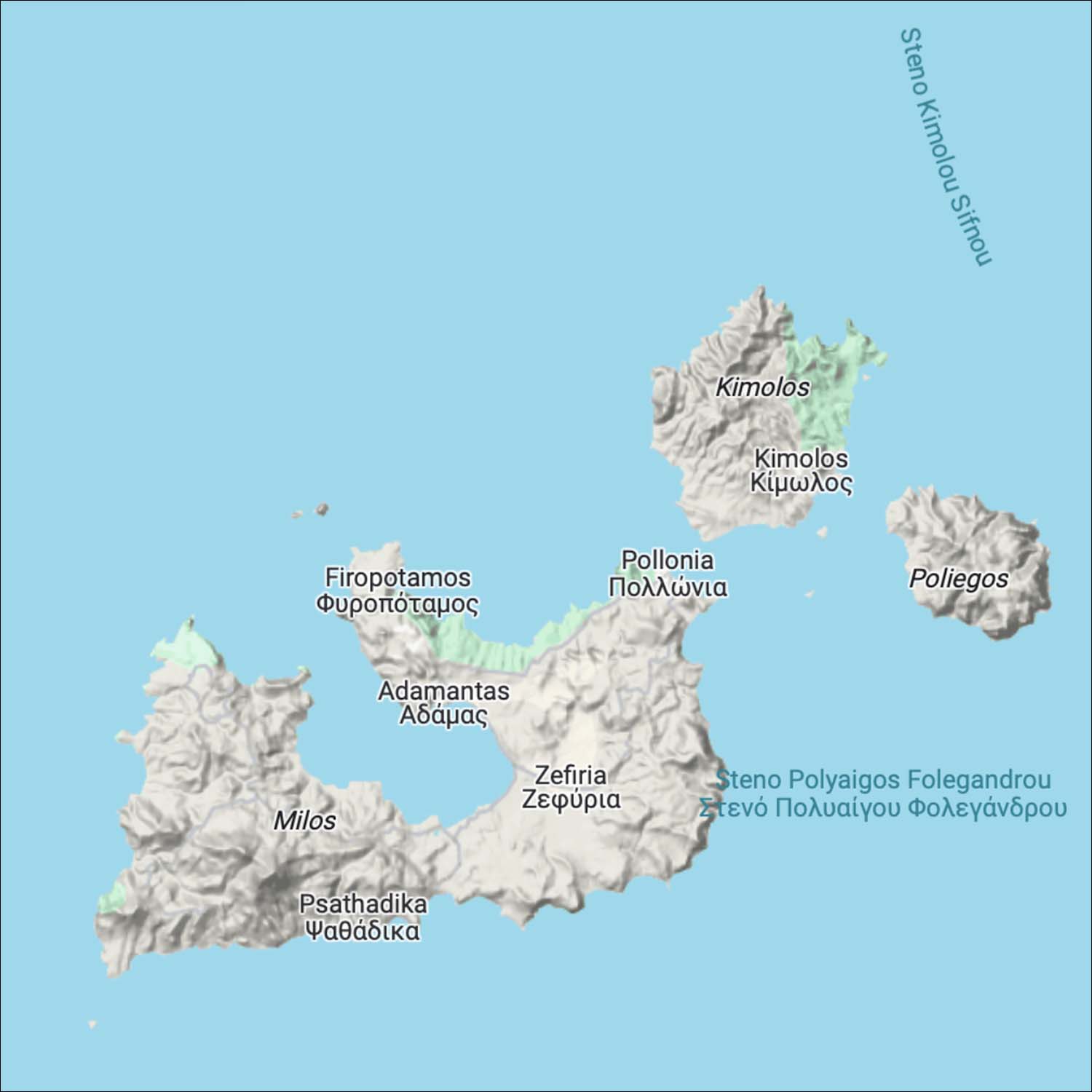
An island of the Kyklades (Cyclades)1 in the southwestern Aigean (Aegean) Sea.
The island is 4,499 square miles (11,652 square kilometers) in area and approximately 66 miles (106 kilometers) southwest of the sacred island of Delos.
The island was initially settled by the Phoenicians prior to the arrival of the Dorians who arrived in the twelfth century BCE. In the aftermath of the sack of Troy, circa 1240 BCE, the Athenian commander Menestheus relocated to Milos and became king after the death of the previous king, Polyanax.
The people of Milos were fiercely independent and resisted any involvement in external territorial disputes. They refused to acknowledge loyalty to Persian King Xerxes when he attempted to enslave Greece in 480 BCE. During the Peloponnesian War (431–404 BCE), Milos was pillaged and raided many times but refused to take sides in the dispute between Athens and Sparta even though the island had been colonized by the Spartans.
A notable natural element found on Milos was what was called "styptic earth," known as Alumen by the Romans. Although the deposit was small compared to the primary source in the city of Sinope on the Black Sea, Alumen (probably iron sulphate) was used in dyes and medicine.
The name of the island might have been derived from the Phoenicians navigator, Melos. The island is also called Milo and Milos.
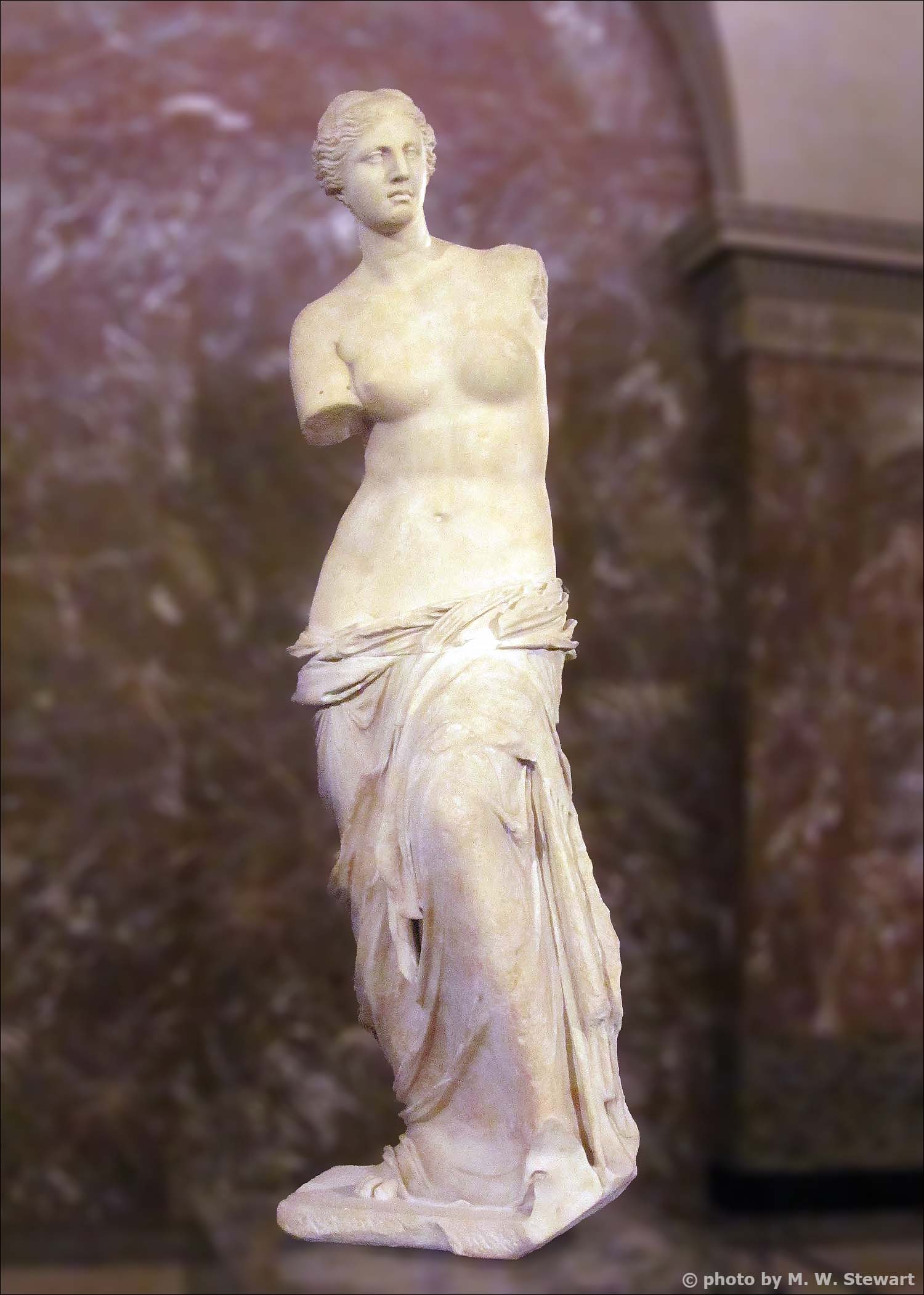
The statue of Venus Di Milo was found there.
1. The islands "circling" around the sacred island of Delos.
Latitude North, Longitude East
36.6939, 24.4577
The statue of Venus de Milo is on display at the Louvre Museum in Paris, France. The 79-inch (202 centimeter) Parian marble statue is assumed to represent the Greek goddess of love, Aphrodite (or the sea goddess Amphitrite). The statue was created in the Hellenistic period circa 130–100 BCE and often attributed to the sculptor, Alexandros of Antioch. The statue was found on Melos in April 1820 CE and given to King Louis XVIII of France, who magnanimously donated the sculpture to the Louvre in March 1821. Although missing the arms, the sculpture exudes feminine grace and exquisite symmetry.
| References: Pliny the Elder, Natural History book 35.188 Apollodorus, The Library Epitome 15b |