Homepage Site Search
Copyrighted Material—All Rights Reserved

Geography Index
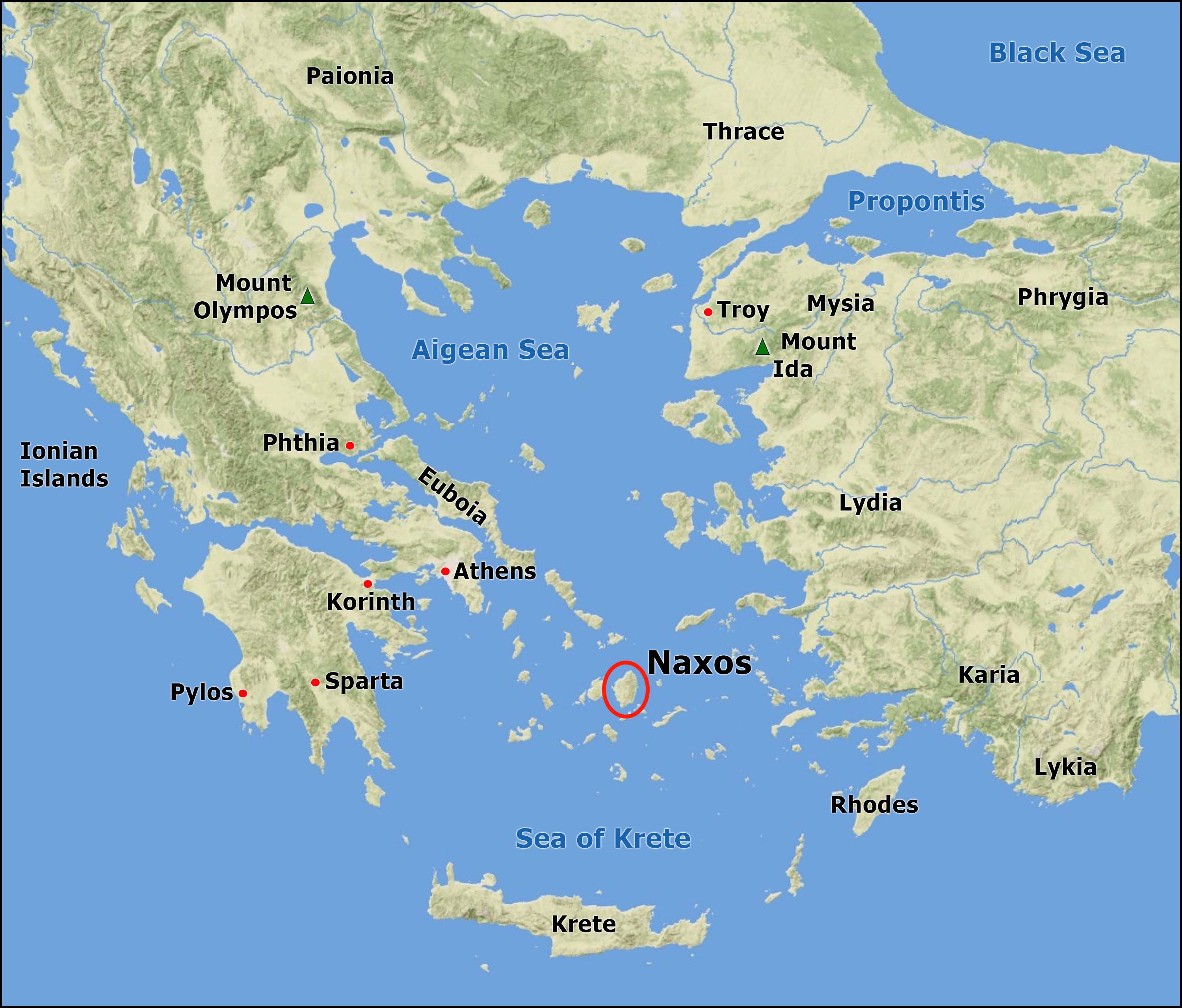
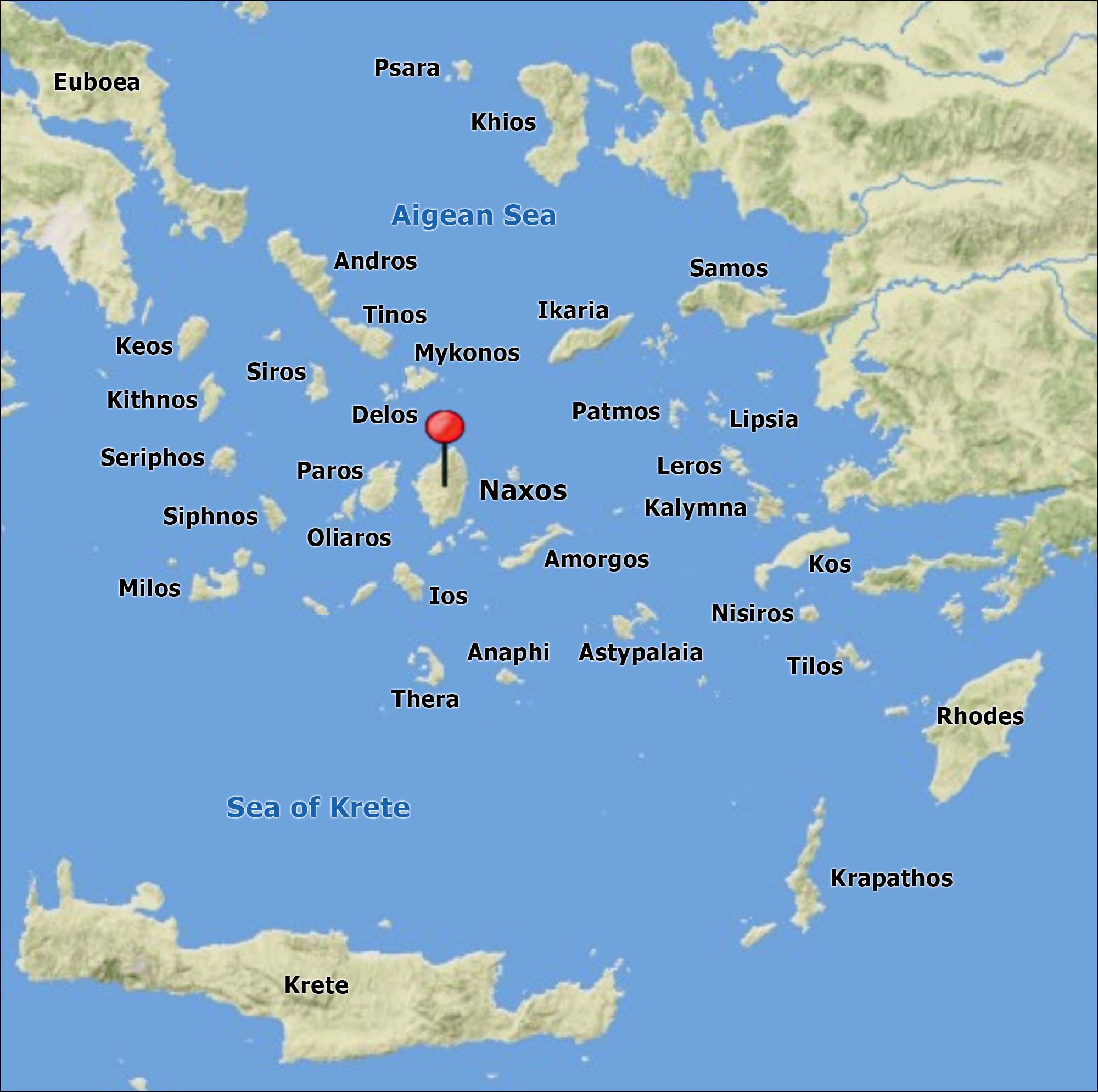
An island in the Aigean (Aegean) Sea; one of the Cyclades.1
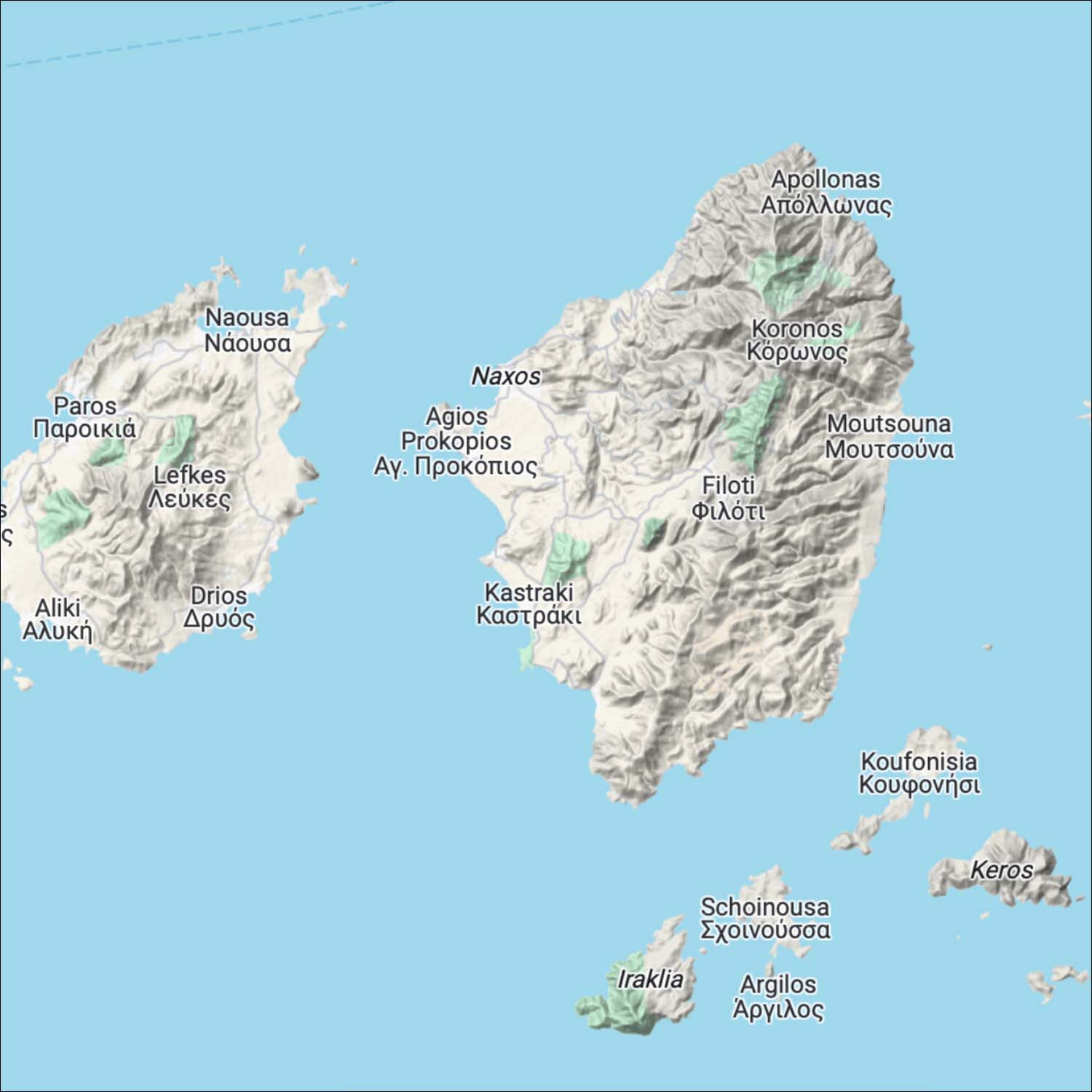
Naxos is located seven and a half miles (12 km) from Paros and 18 miles (28 km) from Delos. Its circumference measures 75 miles (120.7 km) and it is approximately half the size of Paros.
The earliest name for Naxos seems to be Strongyle.2 Two sons of Boreas (North Wind), Butes and Lykurgus (Lycurgus), lived in Thrace until they had an unreconcilable dispute. Butes left Thrace with some companions and eventually landed on Strongyle. They became brigands and raided the sparsely populated neighboring islands and plundered passing ships.
Butes and his cohorts needed women. On one of their excursions to Thessaly, they happened on a group of women celebrating the rites of the god, Dionysos (Dionysus). Butes captured a woman named Koronis (Coronis). She called on Dionysos to help her—the god's response was swift and harsh. Butes went mad and threw himself down a well. Other women were taken captive, notably Iphimedeia and Pankratis (Pancratis), the wife and daughter of Aloeus.
Aloeus sent his unruly and gigantic sons Otos (Otus) and Ephialtes to retrieve Iphimedeia and Pankratis. The brothers defeated the Thracians (the followers of Butes) and decided to stay on the island. They renamed the island Dia in honor of Dionysos—Dionysos had been reared on Naxos, which is why the island is also referred to as Dionysias.
Ephialtes and Otos (Otus) met an untimely end on Naxos. Although young by immortal standards, the "boys" tried to invade the abode of the heavenly gods and made unwanted and inappropriate overtures to the goddesses Artemis and Hera. Assuming the guise of a deer, Artemis jumped between Ephialtes and Otos causing them to hurl their darts at each other.
After the deaths of Otos and Ephialtes, the remaining Thracians occupied the island for more than two hundred years. A series of droughts compelled them to vacate the island.
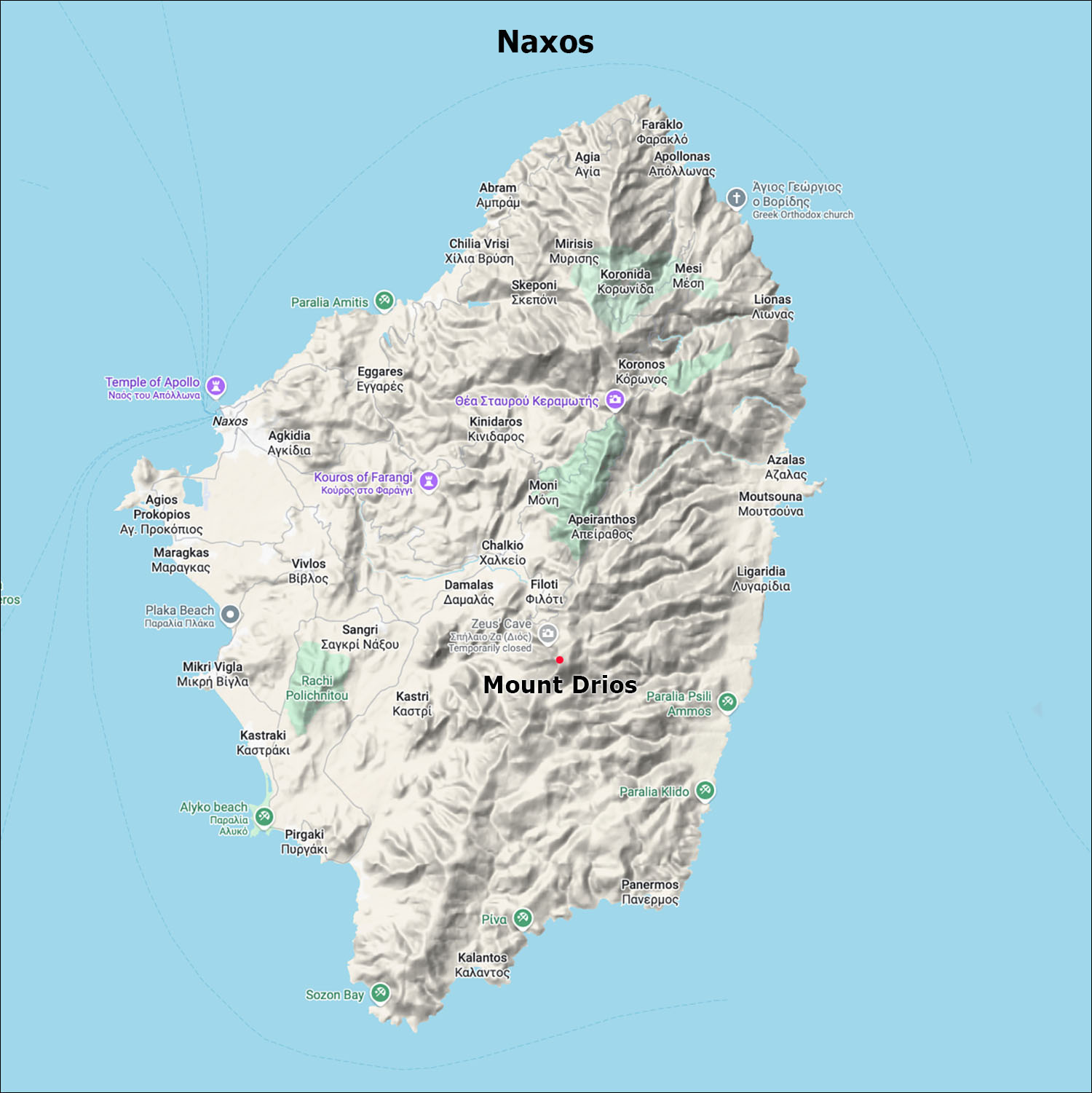
Eventually a group of Karians (Carians) occupied the island led by King Naxos, the son of Polemon—he called the island Naxos after himself. Naxos' grandson Smerdius was king when Theseus and Ariadne came to the island. Ariadne was the daughter of King Minos of Krete (Crete). She and Theseus defied Minos and fled Krete intending to go to Theseus' home in Athens. While on Naxos, Dionysos came to Theseus in a dream and told him to abandon Ariadne. Presumably to be with Dionysos, Ariadne ascended Mount Drios (Drius) and was never seen again.
Aristotle reported that the wasps of Naxos were partial to the flesh of the native adder (a small, venomous viper). After consuming the adder's flesh, the wasp's sting was worse than the adder’s bite.
1. Cyclades—the group of islands that "circle around" the sacred island of Delos.
2. The name Strongyle implies "circular," which does not accurately describe Naxos.
Latitude North, Longitude East
37.0616, 25.4826
| References: Homeric Hymn to Apollon III line 44 Diodorus of Sicily, Library of History book 4.61.5 and 5.50.3 Aristotle, On Marvelous Things Heard 140 Apollodorus, The Library 1.3 Pausanias, Description of Greece Boeotia, XXII.6 Pliny the Elder, Natural History book 4.64 Strabo, Geography book 10.5.3 and 10.5.6 |