Homepage Site Search
Copyrighted Material—All Rights Reserved

Geography Index
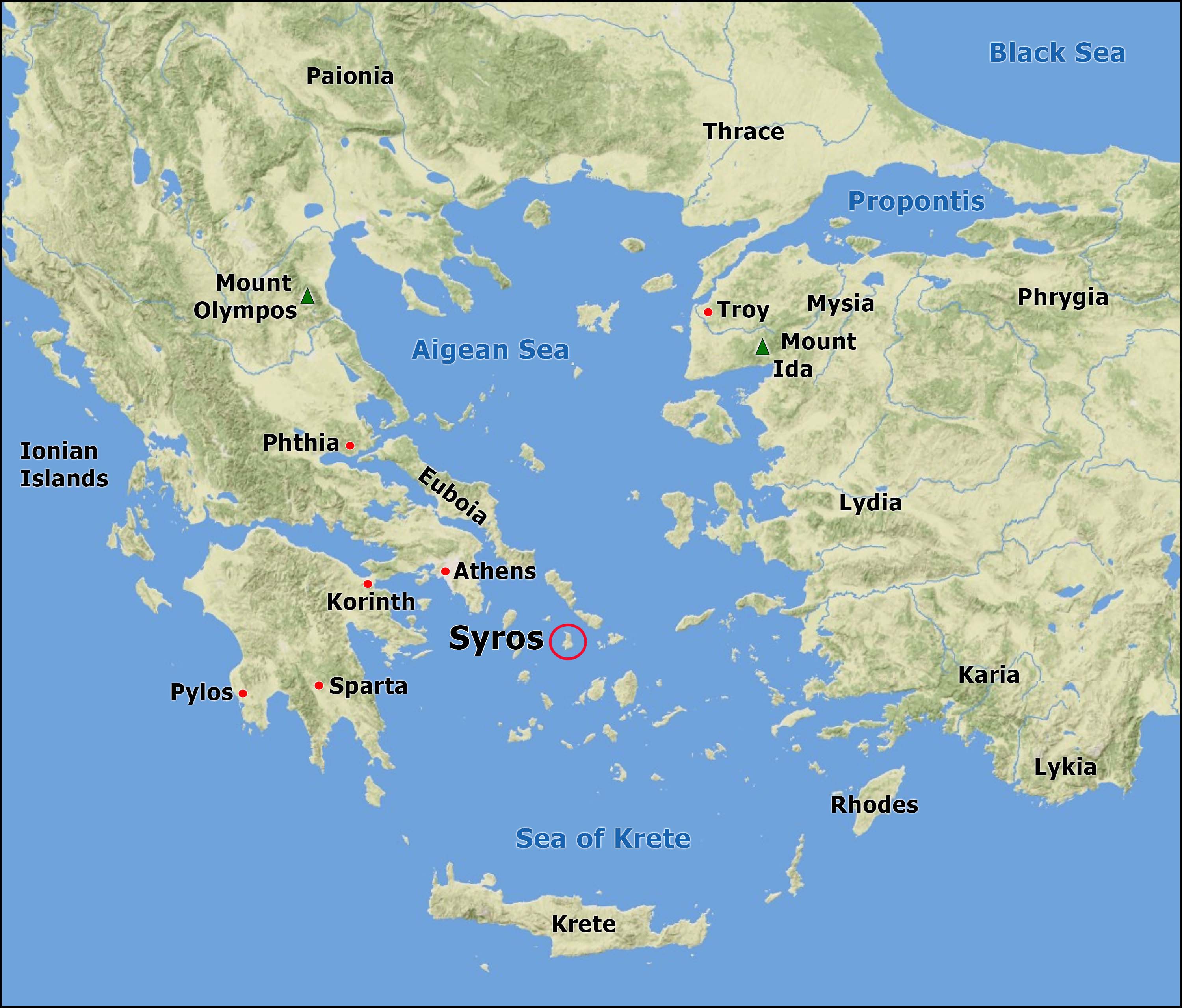
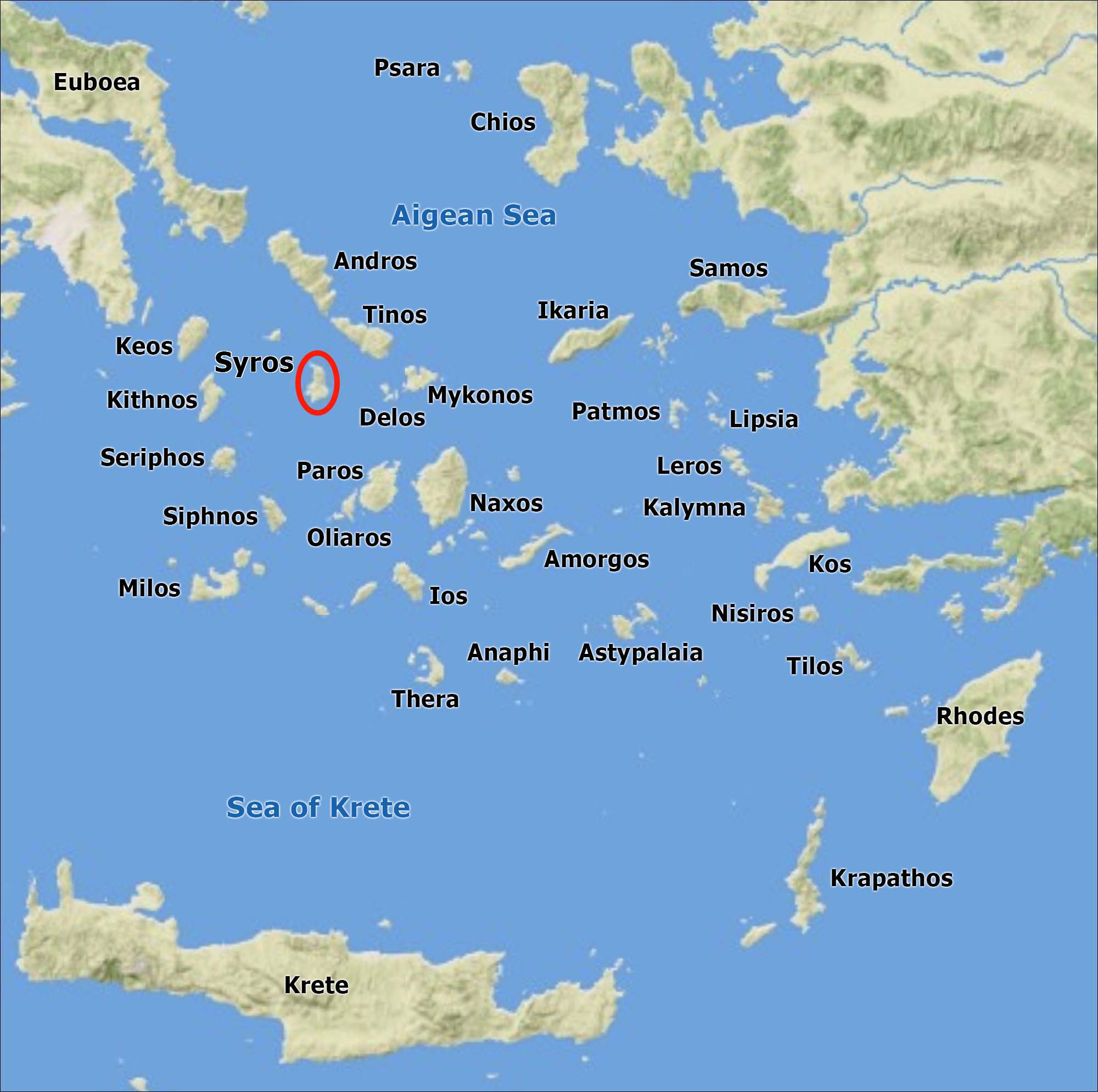
An island in the Aigean (Aegean) Sea; one of the Cyclades.1
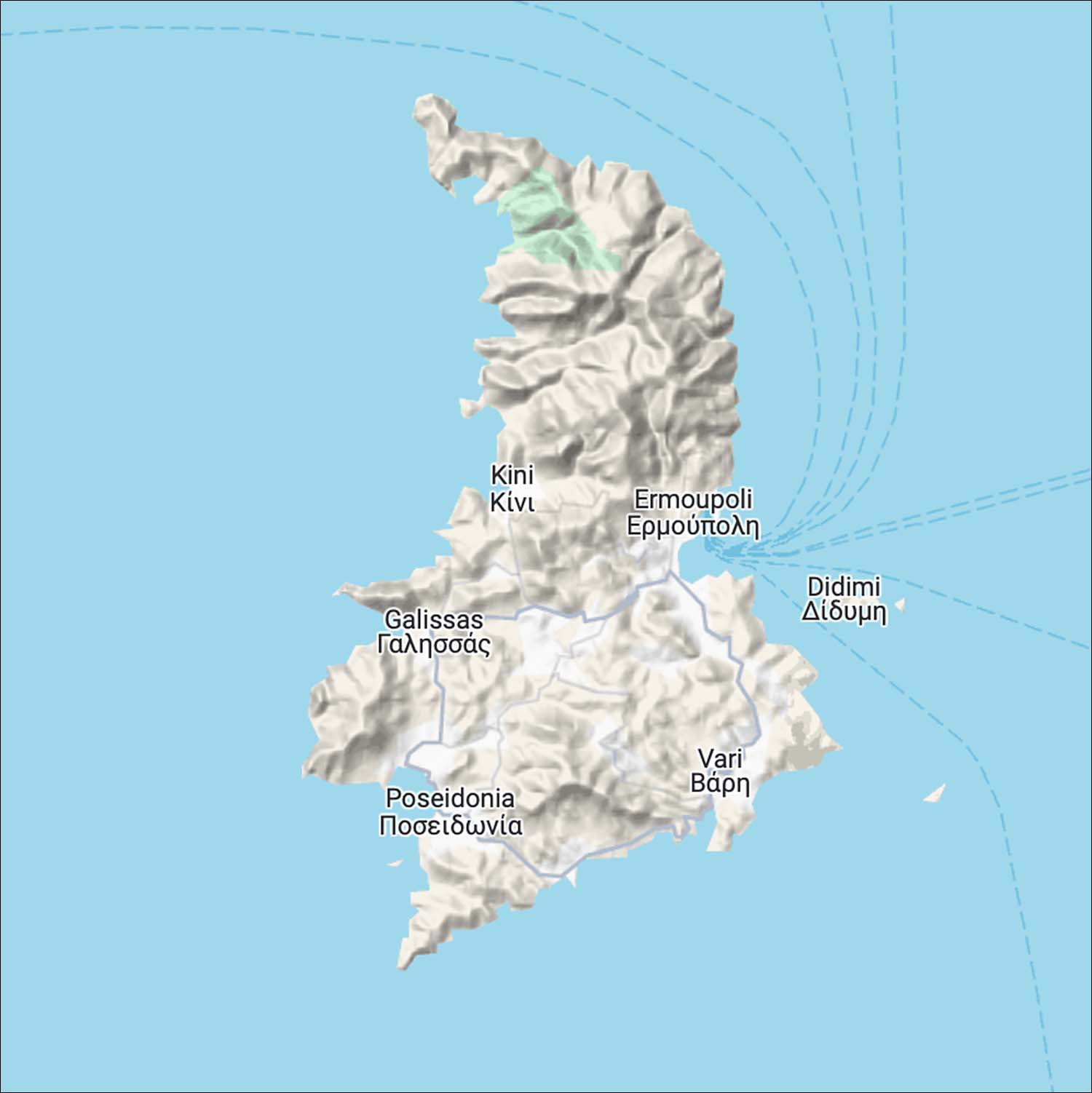
In describing the islands of the Cyclades, the Roman poet Ovid described Syros as "covered with wild thyme." As is apparent from the following topo map, Syros is more or less a rocky outcropping with interior valleys and towns scattered around the perimeter.
There are several reasons to assume that Syros was mentioned by Homer as Syria. In The Odyssey (book 15, line 403), Eumaios the swineherd of Odysseus, described his home as, "an island called Syria, above Ortygia." There were several places named Syria in the classical texts but none seem to match Eumaios' description. The reference to "above Ortygia" is significant because an archaic name for the island of Delos was Ortygia and Syros is located north and west of Delos. The geographer Strabo was unwavering in his belief that Homer did not make erroneous statements. Strabo thought that Homer's Syria could easily have been Syros.
The philosopher Pherecydes was undoubtably from Syros but there is a reference to him stating he was from "Syria." This is generally considered to be an error but it might have been a conscious acknowledgement of Homer's use of the archaic name for Syros. If Homer's Syria is not Syros, we may never know the location of Eumaios' home island.
The philosopher Pherecydes (fl. 544 BCE, was perhaps the most notable native of Syros. Prior to Pherecydes, all literature and philosophy was expressed in verse. Pherecydes, the son of Babys, was the first Greek to write in prose. The origins of Greek philosophical thought can be traced to several men but two stand out—Thales and Pherecydes. Both men were always included among the sages or wise men of their time. Pherecydes' most famous student was Pythagoras, founder of the Italian school of philosophy.
Pherecydes died a pitiable death but was commended by his peers for his ability to retain his dignity in spite of his painful and physically debilitating illness.
1. Cyclades—the group of islands that "circle around" the sacred island of Delos.
Latitude North, Longitude East
37.4328, 24.9094
| References: Homer, Odyssey book 15, line 403 Strabo, Geography book 10.5.3; 10.5.8 Ovid, Metamorphoses book 7, line 464 Claudius Caecus, Isidore, Origins F9 Maximus of Tyre, Oration 7 Diogenes Laertius, Lives of Eminent Philosophers 1. Prologue § 13 Diogenes Laertius, Lives of Eminent Philosophers 1.11. Pherecydes § 119–120 |