Homepage Site Search
Copyrighted Material—All Rights Reserved

Geography Index
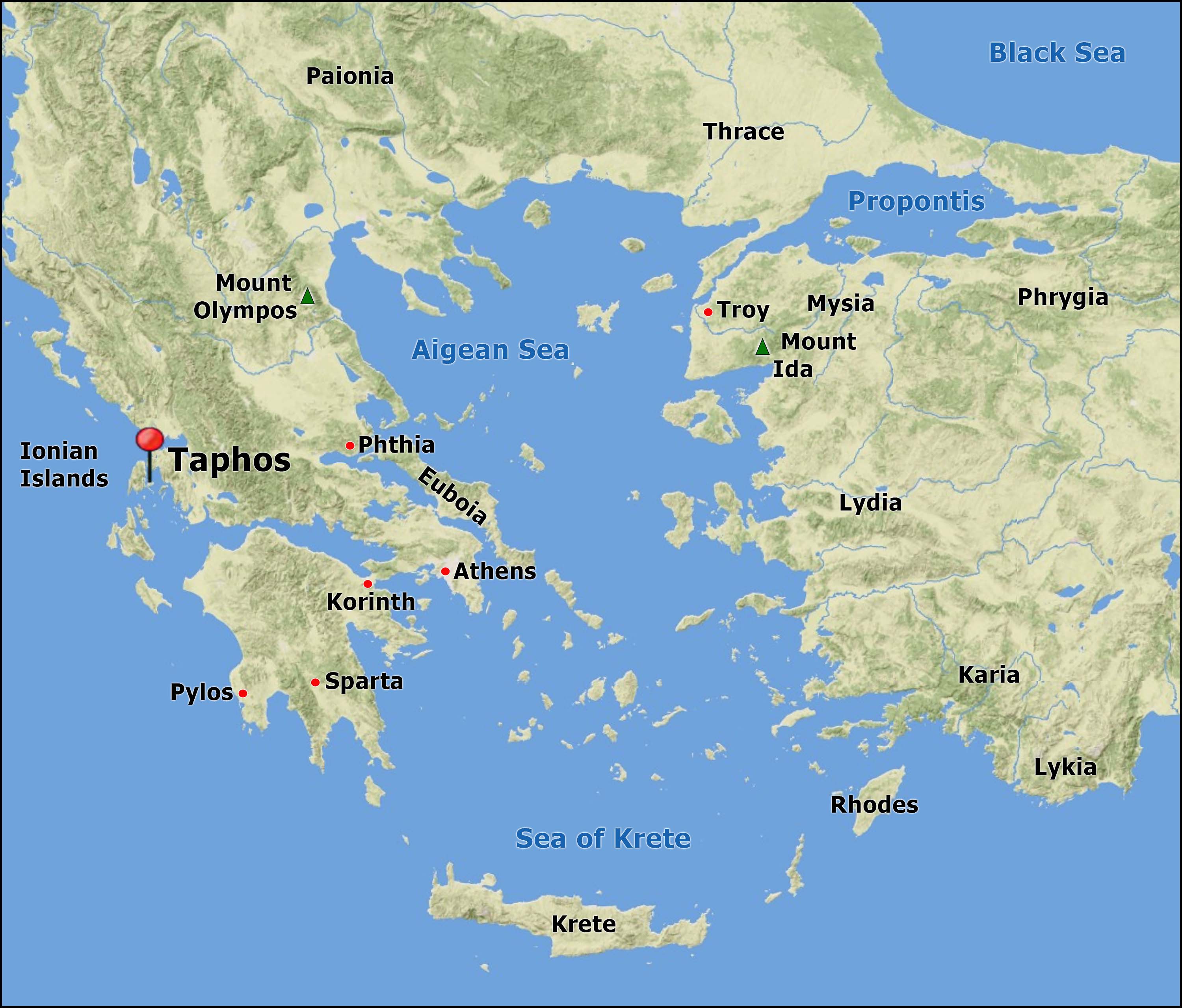
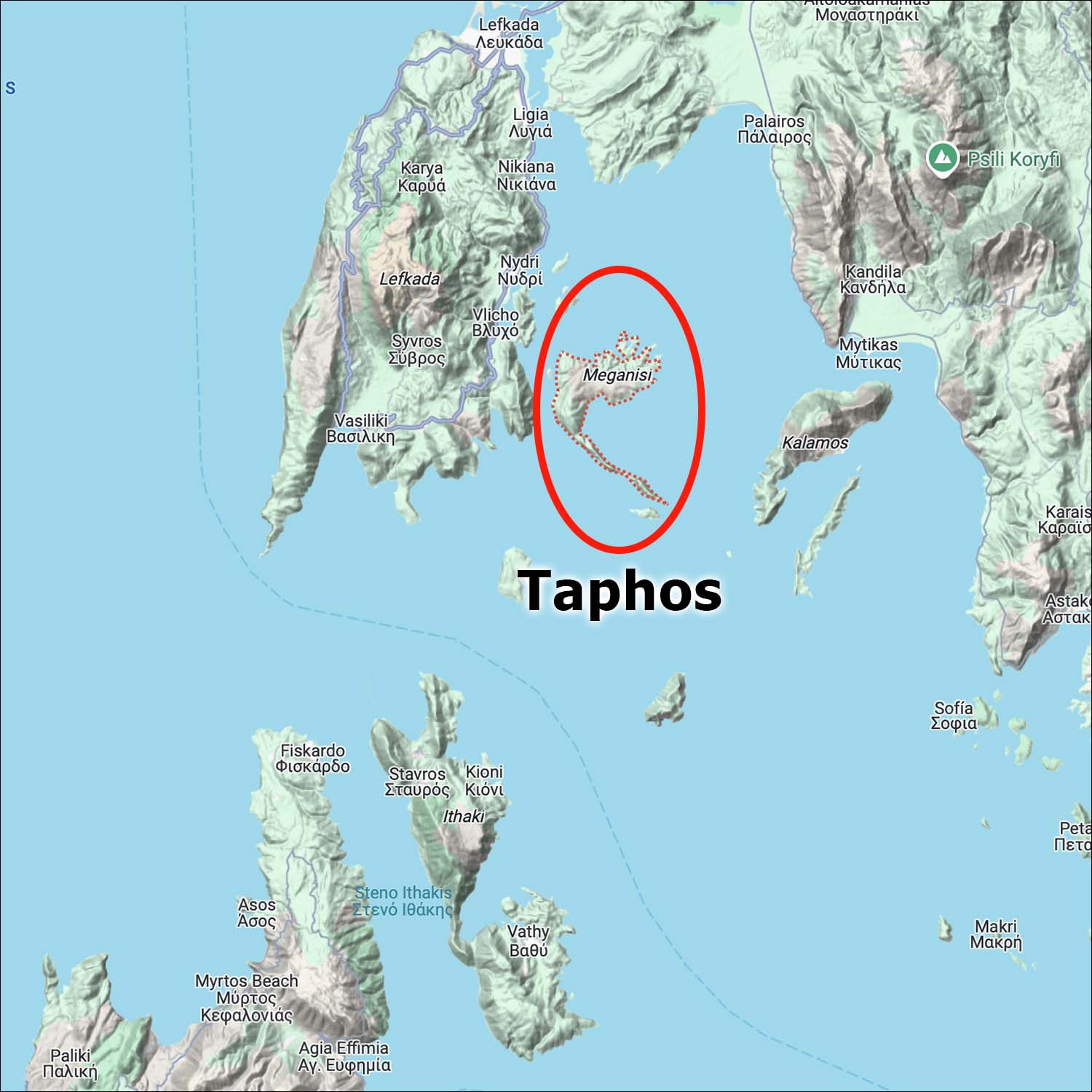
An Ionian island northeast of Ithaka (Ithaca).
Returning to his home on Ithaka after the Trojan War, Odysseus made up a story to disguise his true identity. He said he had been a guest on the island of Taphos and given gifts and sea passage by the king. He said he was subsequently robbed and held prisoner by sailors until he managed to escape when the boat he was on stopped over at Ithaka.
The island of Taphos was colonized by a simi-divine man named Taphius, a son of Poseidon, lord of the sea, and Hippothoe, a grand-daughter of Pelpos, for whom the Peloponnesian Peninsula was named. Taphius named the island Taphos and called the people Teleboans.
Approximately two generations before the Trojan War, Taphos became the focus of a vendetta involving Herakles' (Heracles') stepfather, Amphitryon. As a precondition to consummating his marriage to a woman named Alkmene (Alcmene), Amphitryon was tasked with killing the Teleboans who had killed Alkmene's brothers. Alkmene married Amphitryon even though he had killed her father in a dispute over some oxen. Amphitryon traveled from Thebes in central Greece to Taphos to fulfill his promise. During Amphitryon's absence, the god Zeus assumed the guise of Amphitryon and impregnated Alkmene. Herakles was thus conceived.
Latitude North, Longitude East
38.6440, 20.7777
| References: Taphos: Homer, Odyssey book 1, line 417 Strabo, Geography book 10.2.14; 10.2.20; 10.2.24 Apollodorus, The Library 2;5 and 7 Telaborians: Homer, Odyssey book 1, lines 105 and 181; book 11, line 452 Hesiod, The Shield of Herakles lines 1–26 Hesiod, Catalogue of Women §136, line 17 |