Homepage Site Search
Copyrighted Material—All Rights Reserved

Geography Index
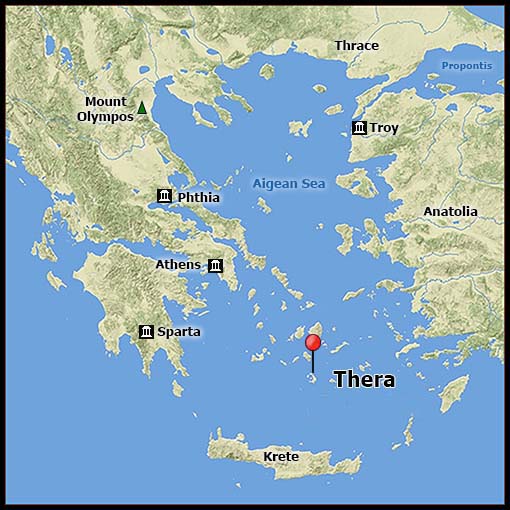
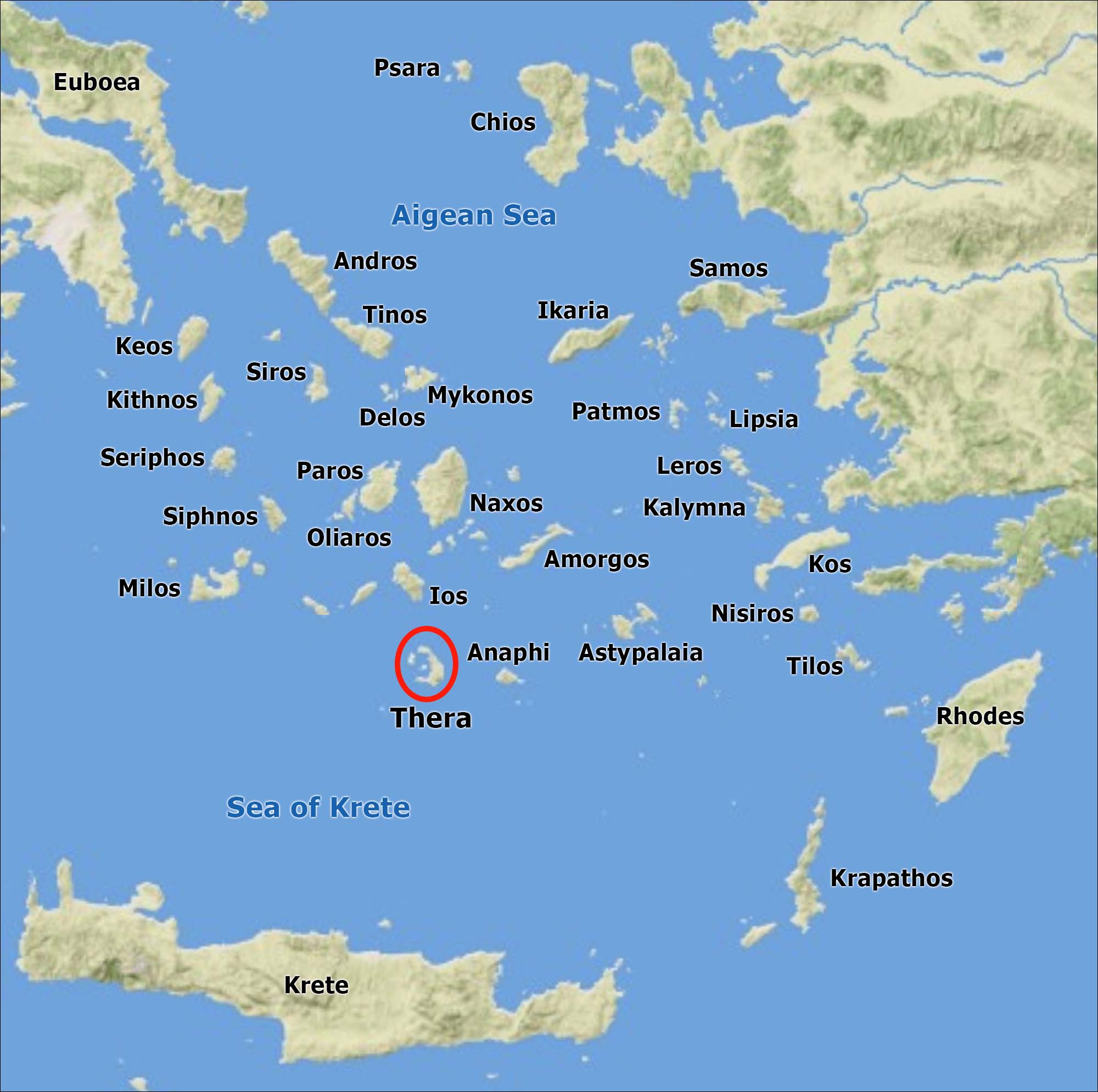
An island in the Aigean (Aegean) Sea; one of the Cyclades.1
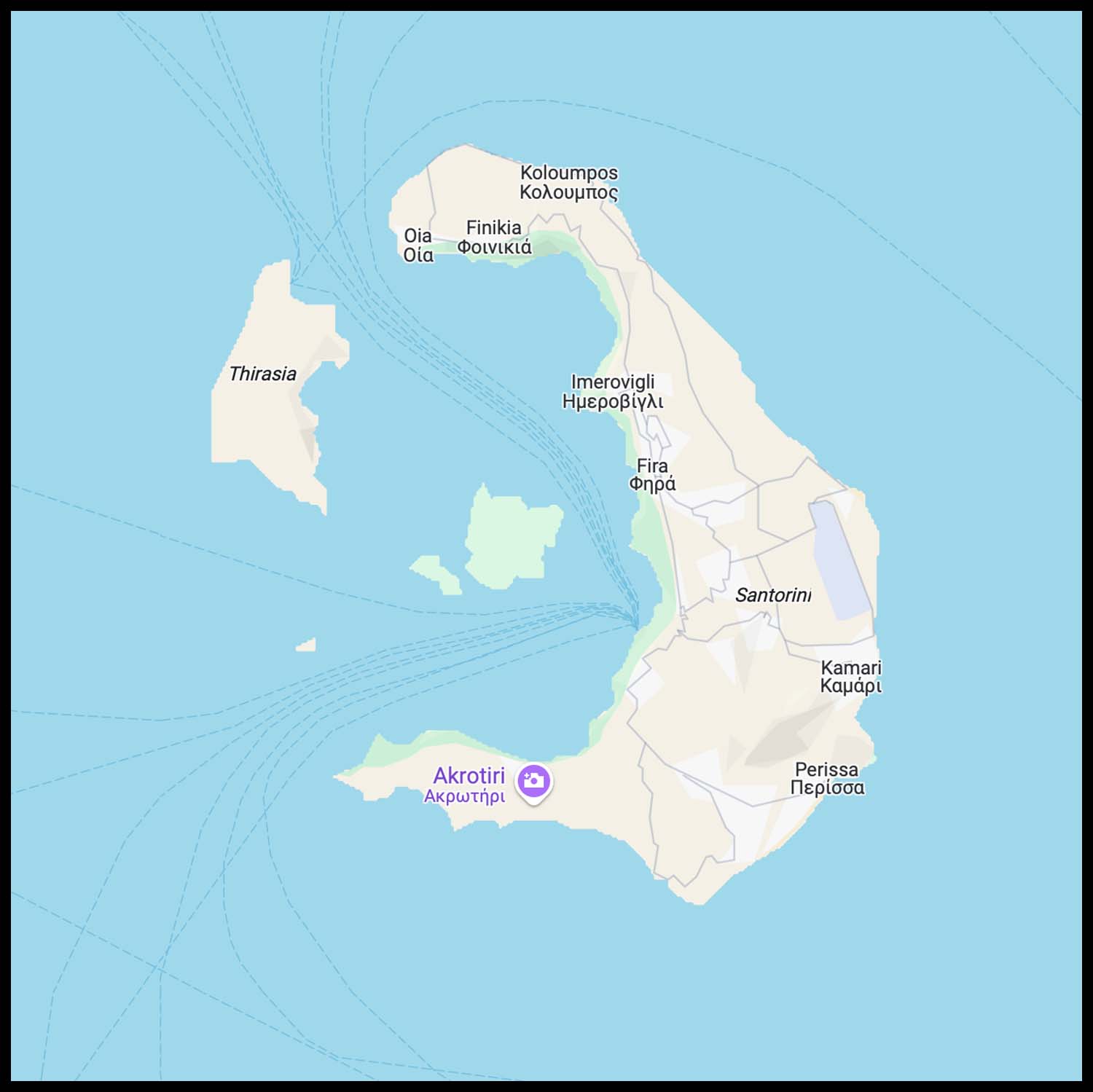
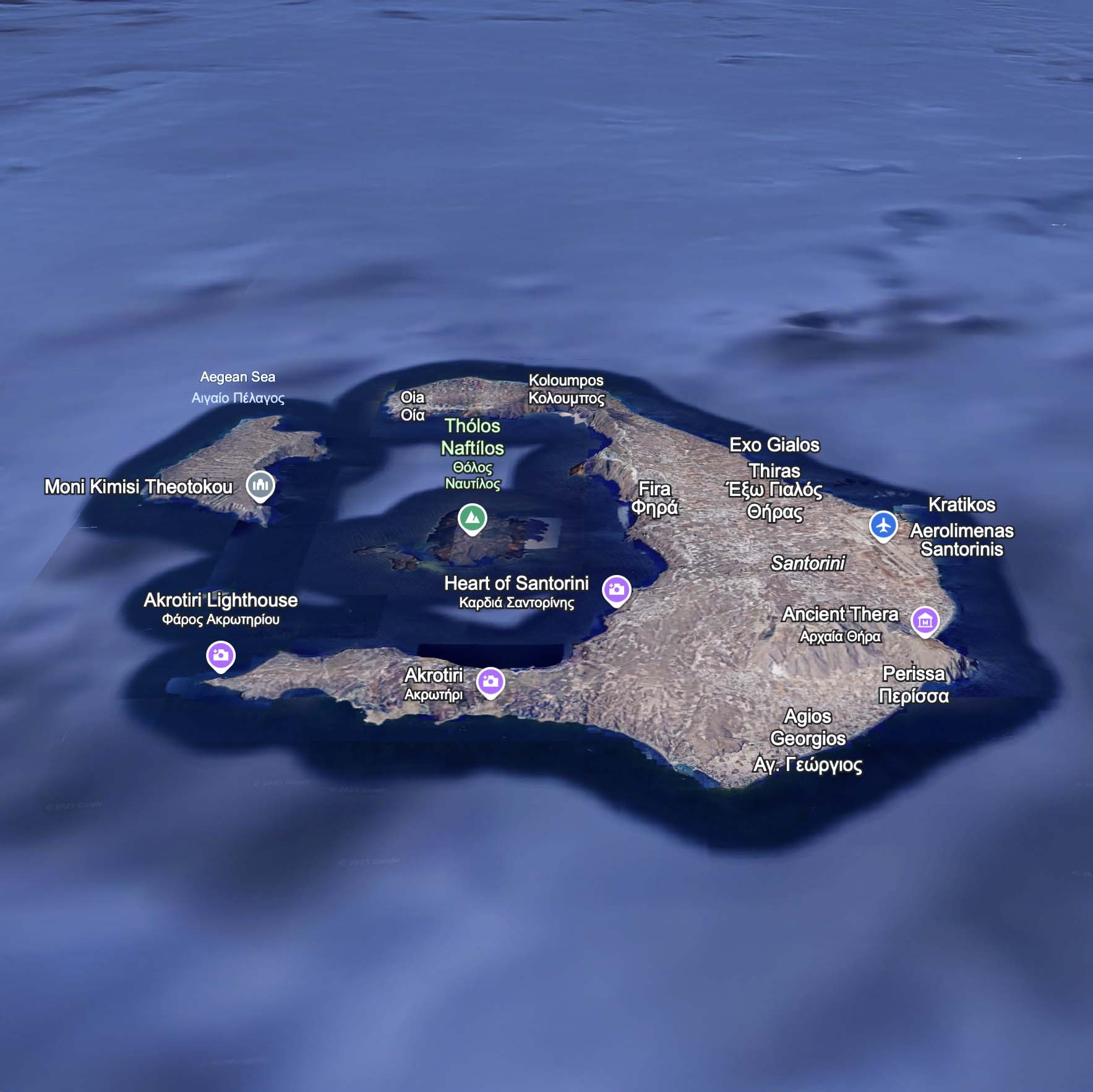
Thera is the largest of three tightly grouped islands that were previously one island. A massive valcanic eruption in 1604 BCE literally blew away most of the island, leaving Thera as the large semicircular outer rim with two smaller islands in close proximity. Seeing the remnants of the island makes it easy to imagine that the original shape was circular.
The oldest known name for modern Thera is Kalliste (Calliste), meaning "most beautiful." The origin of Kalliste is directly related to the Quest for the Golden Fleece by Ieson (Jason) and the Argonauts. After successfully acquiring the Golden Fleece, the Argonauts were stranded in Libya. A son of the sea god Triton helped the Argonauts escape the desert and gave an Argonaut named Euphemus a clod of dirt that, when thrown into the sea, would become the island home of Euphemus' descendants. The dirt clod found its way into the sea as if by divine guidance and became the beautiful island of Kalliste. Generations later, a descendant of Euphemus named Theras founded a Spartan colony on Kalliste and changed the name of the island to Thera, after himself.
Thera has been the name of the island since prehistoric times and appears on modern maps as Thera and Santorini. The Romans called the island Santorin because there was a church on the island dedicated to Saint Irene; the Latin name Santorin evolved to become modern Santorini.
Besides being beautiful and picturesque, Thera is noted for the archeological ruins of the pre-volcano Minoan city, Akrotiri. Apparently there was enough forewarning of the impending eruption to allow the inhabitants of Akrotiri to evacuate their city before the devastating blast. Volcanic ash covered the city thus preserving many buildings but, unlike Pompey, no human remains have been found in the buried city. The remaining artifacts and artwork have provided a unique glimpse into daily life on the island. The written language preserved at Akrotiri is Linear A, which has only been deciphered on a rudimentary level.
1. Cyclades—the group of islands that "circle around" the sacred island of Delos.
Latitude North, Longitude East
36.4054, 25.3970
| References: Diodorus of Sicily, The Library of History book 12.5 Pindar, Pythian Ode 5 Introduction Herodotos, The Histories book 4.148–153 Pausanias, Description of Greece book 14.3 book 15.7 book 16.6 Apollonius of Rhodes, Argonautica book 4, lines 1741–1764 Pliny the Eder, Natural History book 2.139 Strabo, Geography book 1.2.40 book 1.3.16 book 8.3.19 book 10.5.1 book 17.3.21 |